What we lost when the cape became a rocket range
An editorial accounting. The cape's federal acquisition gave the country a launch range and gave the cape's families a 75-year erasure. Both happened. Both should be named.
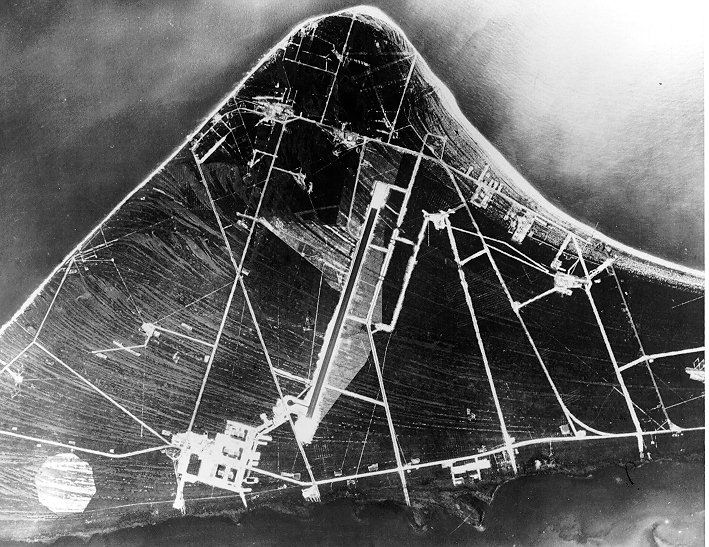
The cape’s history is usually told as a story of progress. From an obscure Florida peninsula to an Apollo launch facility, to the Shuttle era, to SpaceX’s high-cadence reusable launches. The progress is real. The launches are real. The technical achievement is real. But the progress narrative obscures something the cape’s families know and most cape visitors don’t: about 250 people lived on this peninsula in 1948. They had a school. They had churches. They had a post office, a packing house for citrus, two small cemeteries, a fishing economy, a citrus economy, a circuit-preacher religious life, and a coastal-pioneer identity that had developed over a century. The 1949 federal acquisition ended all of it within four years. The launches happened on top of a community that the launches replaced. That’s worth naming.
The accounting
The cape’s pre-1949 community included, by best documentary estimates:
- 187 to 215 year-round residents (across 1900 to 1940 census records)
- About 40 separate landowning families
- One school (Cape School #2, operating 1898-1949)
- One post office (Cape Canaveral, operating 1885-1956)
- Two small churches (Methodist and Baptist)
- Two cemeteries (Burnham and Wilson Family)
- About 1,300 acres of producing orange groves
- Two fishing camps
- A general store and a few smaller commercial buildings
- About 15 miles of dirt road connecting the cape’s settlements
- A small turpentine operation
- A century of accumulated knowledge about cape ecology, weather, and seasonal patterns
By 1953, all of this was gone or in the process of being removed. The cape’s permanent civilian population had dropped to perhaps 20 people: the lighthouse keepers, a few holdout families on small parcels that had not yet been condemned, and a handful of others who would be gone within three more years.
The federal acquisition was largely complete by the mid-1950s. The cape was an Air Force base, not a civilian community. The launches started in 1950 and have continued ever since.
What the displaced families got
The federal compensation, in 1949 dollars, averaged $200 per acre for citrus land and lower for non-cultivated land. The Wilson family contested the appraisal and won a jury award of $445 per acre in 1951, which was about double the federal offer. Most other families accepted the federal offer rather than litigate.
In 2024 dollars, the average $200 per acre compensation is roughly $2,600 per acre. The Wilson family’s $445 per acre award is roughly $5,800. Neither figure was market-clearing in 1949 (Brevard County citrus land elsewhere was selling for $400 to $800 per acre, more than the federal offer). Neither figure approached market value in any reasonable contemporary calculation.
The compensation was for land. There was no compensation for:
- The loss of the school
- The loss of the post office and the daily mail
- The loss of the churches
- The loss of the citrus operation as a commercial enterprise (the federal offer paid for land, not for ongoing business value or commercial goodwill)
- The loss of community
- Relocation costs (a few hundred families had to find new homes)
- The loss of specific cultural and economic knowledge built up over a century
These losses are difficult to quantify. They are also real. The cape’s families could no longer live where they had lived. The economic context they had operated in was gone. Their children would attend different schools. Their dead were still on the cape, but accessible only with federal escort.
What the country got
The federal acquisition supported:
- The Joint Long Range Proving Ground (1949-onward, providing Cold War missile-test capability)
- Project Mercury (1958-1963, the first US human spaceflight program)
- Project Gemini (1962-1966, demonstrating rendezvous and EVA techniques)
- Apollo (1967-1972, including the moon landings)
- The Space Shuttle (1981-2011)
- Commercial spaceflight (2010-present, including SpaceX, Blue Origin, ULA)
- Approximately 26,000 launches across all programs (1950 through 2024, including all unmanned and crewed flights)
- The strategic positioning of US national security space operations
- The economic activity that has supported, at peak, about 26,000 direct Brevard County jobs
This is significant. The cape’s launches have done real work for the country. The moon landings, the Hubble servicing missions, the Crew Dragon flights, the Starlink constellation are accomplishments. The cape’s contribution to American spaceflight is not in dispute.
But the federal acquisition that enabled all this was not a no-cost transaction. It was a community that paid the cost.
The argument that they were compensated
The standard defense of the federal acquisition is that the families were compensated. They got money for their land. They moved. They built new lives in Cocoa Beach, Titusville, Mims, and elsewhere. Some of them prospered. The cape’s families did not die from the acquisition; they relocated.
This is true. It is also incomplete. The compensation was below market value. The relocation was forced. The community was destroyed in ways that money could not replace. The accounting of “they got money” misses the accounting of what was actually lost.
The standard defense is also a one-time accounting. The cape’s families were compensated once in 1949. They have not been compensated since. The continuing economic activity at the cape (the cruise port, the launch industry, the related tourism) benefits Brevard County broadly but does not return to the displaced families’ descendants.
The cape’s history, in this sense, is a story of public benefit that was paid for by a small group of private cost-bearers who have not, in 75 years, been further acknowledged.
What this site does about it
This site exists in part to name the cape’s pre-1949 community as something that existed and mattered, not just as a footnote to the launch history. Every article on this site that touches the pre-1949 period gives the village’s families their proper space. The cemeteries get their own article. The schools get their own article. The Wilson family, the Burnham family, the Penny and Stone families are named where they should be named.
This is not enough. It is what one website can do.
The federal facility has its memorials. Apollo 1 at LC-34. The Astronauts Memorial at KSC. The lighthouse, restored by the Foundation. The cape’s launch history is well-documented and well-commemorated.
The cape’s civilian history is less commemorated. The two cemeteries are accessible only to verified descendants. The schoolhouse site is unmarked. The post office building is gone. The Wilson grove is bulldozed. The fishing camps are demolished. The cape’s pre-1949 physical infrastructure is essentially absent.
What we owe
Three things, in my view.
First, the truth about what happened. The federal acquisition was not a friendly transfer. It was a federal taking, below market value, that broke a community. Saying so does not undo it. Saying so is the minimum the historical record requires.
Second, the names. The cape’s families should not be anonymous in the cape’s history. Mills Burnham. Sarah Burnham. Henry Wilson Sr. and his son. Maria Stone. Sarah Honeywell. Joseph Penny. William Quarterman. These are people. They lived on the cape. Some of them are buried on the cape. They should be named.
Third, the descendants. The cape’s families’ descendants are alive in Brevard County and elsewhere. Many maintain the family-visit privileges at the cemeteries. Some are involved in cape preservation through the Lighthouse Foundation. They are not invisible. They should not be invisible.
This is not a call for compensation or restitution. The cape’s families know what happened, made their decisions about how to respond, and have lived their lives in the aftermath. They are not asking for ongoing reckoning. They are not asking for symbolic redress.
What I think they are owed (the people who lived there, their families now) is accuracy. The cape’s history is whole. It includes the launches. It includes the displacement. Both are part of what the cape is.
The cape now
In 2026, the cape’s launch industry is busier than ever. The cruise port handles more passengers than at any previous time. The community of about 110,000 across Cape Canaveral, Cocoa Beach, Merritt Island, Titusville, and Port St. John is economically healthier than it has been since the Apollo peak.
This is good. The cape is a working, prosperous place. The trade-off that was made in 1949 (community destruction for federal use) has produced lasting public benefit. That benefit is now being shared more broadly than it was at any previous point.
But the trade-off was made. It was made by federal action, on behalf of public benefit, at the cost of a small group of private citizens. That cost is part of the cape’s history. It should remain part of the cape’s history.
The launches go up. The cape’s families know what was lost.