SpaceX returns the Cape to glory, 2010 to now
Falcon 9 first flew from Cape Canaveral in June 2010. By 2024, SpaceX flew nearly 100 missions a year from the cape. Reusable boosters, Crew Dragon, the Starlink cadence : the cape is the busiest launch site in human history.
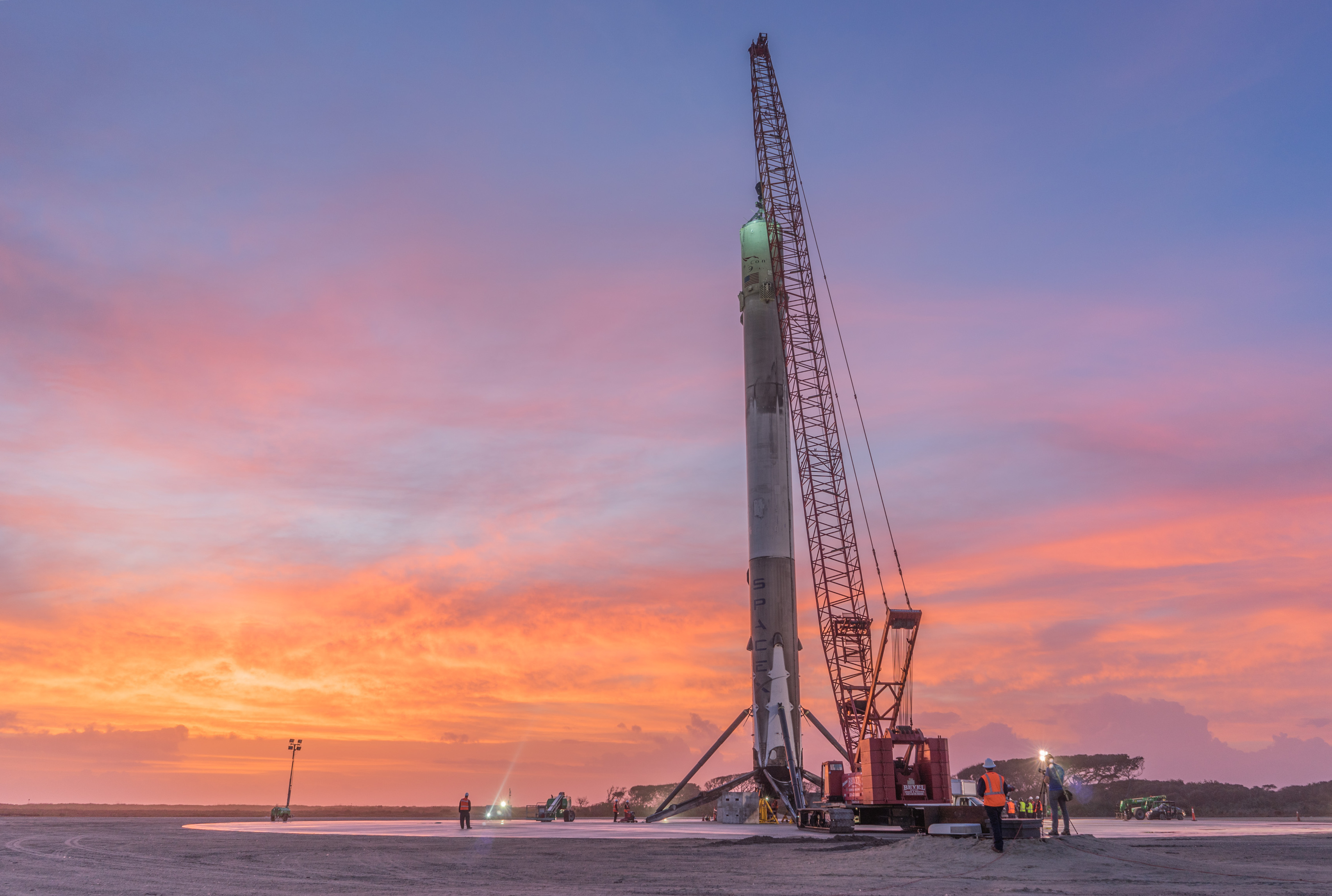
SpaceX launched its first Falcon 9 from Cape Canaveral’s Launch Complex 40 on June 4, 2010, after 15 months of pad refurbishment. The cape was, at that point, in the second year of the worst space-economy contraction in its history. SpaceX has launched nearly 400 missions from Cape Canaveral and Kennedy Space Center as of early 2025, more than the Air Force, Navy, and NASA combined had launched from the cape between 1950 and 2009. The company demonstrated orbital-class booster recovery on December 21, 2015 (Falcon 9 Flight 20 returned to Landing Zone 1, the former LC-13 site). The first crewed flight (Crew Dragon Demo-2, May 30, 2020) restored US human spaceflight after a nine-year gap that began when the Shuttle retired. The cape is, in 2026, the busiest launch site in the history of spaceflight by a significant margin.
The 2010 first launch
SpaceX’s first cape launch was Falcon 9 Flight 1, on June 4, 2010, from LC-40. The mission was a test flight carrying a Dragon spacecraft mockup. The flight was successful: nominal first-stage burn, successful staging, second-stage burn to a 250-kilometer orbit, controlled deorbit.
The flight was an early demonstration of a new approach. SpaceX, founded by Elon Musk in 2002, had won a NASA Commercial Resupply Services contract in 2008 to deliver cargo to the International Space Station. The CRS contract was the company’s first significant commercial revenue. Falcon 9 was the launcher.
The cape’s response was cautious. The Air Force range support was provided, but the cape’s established contractors (Boeing, Lockheed Martin, the legacy United Launch Alliance) viewed SpaceX as a startup unlikely to scale. SpaceX hired ground crew, established pad operations, and built its cape presence gradually through 2010-2013.
Crewed flight returns
The Space Shuttle had retired in 2011, ending US human spaceflight capability. For nine years, US astronauts traveled to the International Space Station only aboard Russian Soyuz spacecraft, at fees of approximately $80 million per seat.
NASA’s Commercial Crew Program, established 2010, was designed to restore US crewed launch capability through commercial partnerships. The Crew Dragon (SpaceX) and CST-100 Starliner (Boeing) were the two selected vehicles. SpaceX moved faster.
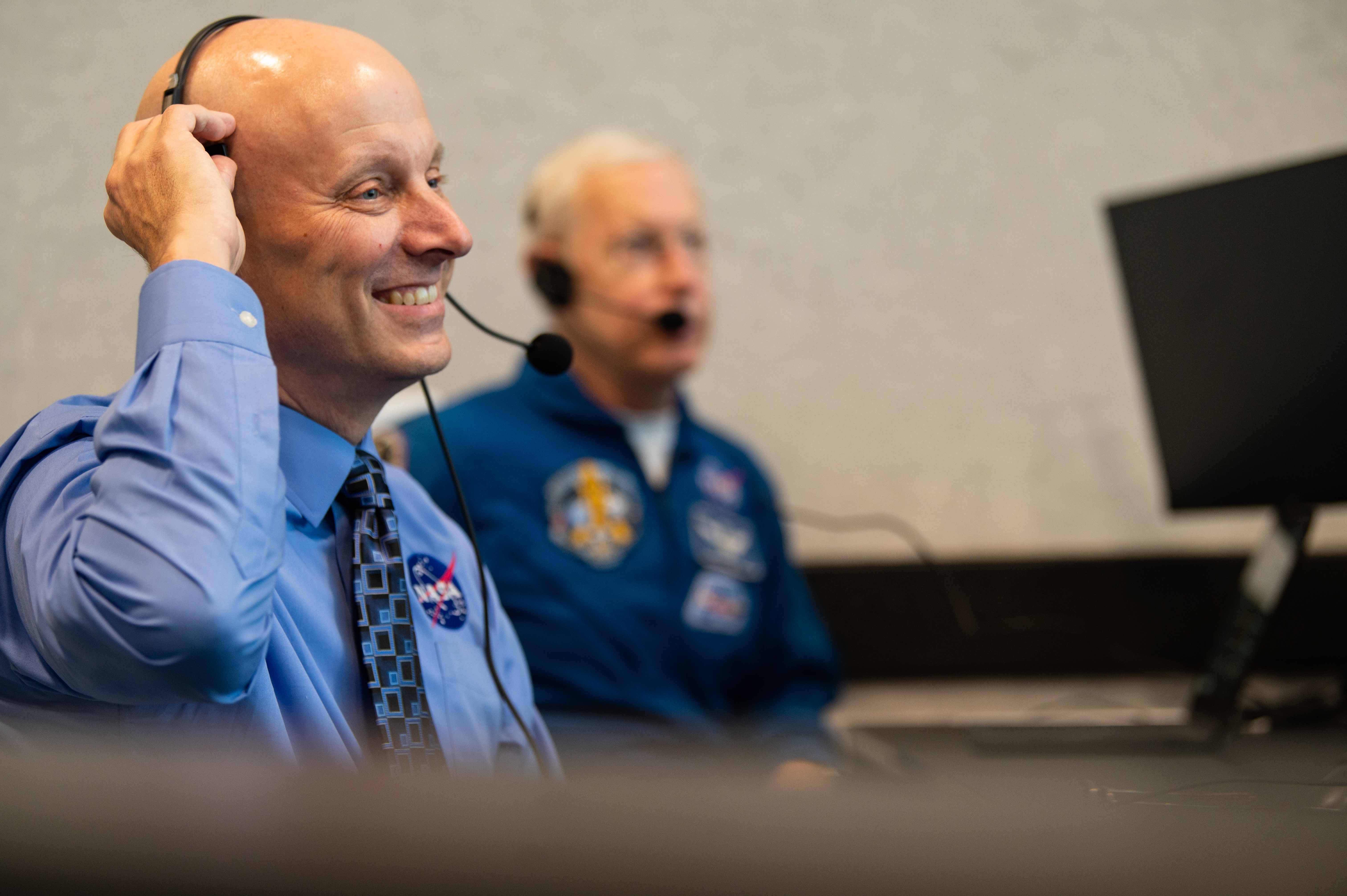
Crew Dragon Demo-2 launched on May 30, 2020, from LC-39A. Bob Behnken and Doug Hurley flew the mission, the first US-launched crewed flight since STS-135 in July 2011. Demo-2 was a test mission, demonstrating the Crew Dragon vehicle’s full crewed capability. It was a complete success.
Crew Dragon then transitioned to operational service. Crew-1 launched November 15, 2020, with four astronauts: Mike Hopkins, Victor Glover, Shannon Walker, and Soichi Noguchi. The 168-day mission was the first operational Commercial Crew flight.
Subsequent crewed missions: Crew-2 (April 2021), Crew-3 (November 2021), Crew-4 (April 2022), Crew-5 (October 2022), Crew-6 (March 2023), Crew-7 (August 2023), Crew-8 (March 2024). By 2024, Crew Dragon was flying ISS crew rotations roughly every six months on a predictable schedule.
The cape’s role in human spaceflight resumed. After 2020, the cape is again the place where US astronauts launch to orbit.
Reusability
SpaceX’s reusable boosters changed the economics of cape operations. The first attempted landing of a Falcon 9 first stage was January 10, 2015, on the autonomous drone ship Just Read the Instructions. The booster reached the drone ship but landed too hard and tipped over.
The first successful orbital-class booster landing happened on December 21, 2015 (Falcon 9 Flight 20, the OG-2 mission). The booster returned to Landing Zone 1 on the cape, the former LC-13 site that SpaceX had refurbished for this specific purpose. The landing was successful and the booster was recovered intact.
The first reused booster flew on March 30, 2017 (SES-10 mission). Reuse rapidly became standard. By 2024, the average Falcon 9 booster flew approximately 12 missions before retirement.
The economic impact was substantial. SpaceX’s per-launch cost dropped from approximately $60 million in 2014 to approximately $15 million per launch by 2023 (for internal Starlink missions; commercial customer pricing was higher). The cape’s launch tempo accelerated accordingly.
Starlink and the cadence revolution
The Starlink constellation began launching in May 2019. The constellation is designed for global broadband internet service from low Earth orbit. As of January 2025, Starlink has launched approximately 7,000 satellites and operates a constellation of about 6,800 active satellites.
The Starlink deployment cadence drove SpaceX to a launch tempo unprecedented in spaceflight history. SpaceX launched 31 Falcon 9 missions in 2021. 61 in 2022. 96 in 2023. Approximately 130 in 2024 (split between cape, Vandenberg, and Brownsville). Approximately 90 of those were cape launches.
For context, the entire global launch industry (all nations, all rockets) averaged 70 to 90 successful orbital launches per year in the 1990s and 2000s. SpaceX alone now exceeds those totals. The cape alone accounts for more launches per year than China’s combined launch industry.
The launch cadence has reshaped the cape’s operational reality. Falcon 9 launches happen, on average, every four days. Pad turnaround at LC-40 has been reduced to as little as 21 days. The Eastern Range now supports more launch events in a typical week than it did per month during the 1990s.
The cape’s commercial workforce
SpaceX’s Brevard County workforce has grown from a handful of employees in 2010 to approximately 2,500 to 3,000 by 2024. The workforce includes:
- Launch operations (Falcon 9 vehicle processing, pad operations)
- Production workers (some Falcon 9 components are now built in Brevard County)
- Engineering staff
- Recovery operations (booster landing, payload fairing recovery)
- Crew Dragon ground processing
The growth has driven Brevard County’s housing and commercial real estate market. Median home prices in Titusville and Cocoa Beach increased 60 percent between 2018 and 2024. Hotels and restaurants have been busy. The local economy is, in 2024, considerably healthier than at any point since the Apollo peak.
Launch failures and concerns
SpaceX’s cape launches have not been failure-free. Notable failures and near-failures:
AMOS-6 (September 1, 2016): A Falcon 9 exploded on LC-40 during a static fire test. The payload (an Israeli communications satellite) was destroyed. The pad was extensively damaged. SpaceX rebuilt LC-40 and resumed flights in January 2017.
CRS-7 (June 28, 2015): A Falcon 9 disintegrated 139 seconds after launch from LC-40 due to a strut failure in the second stage. The Dragon cargo and the booster were lost. No crew was aboard (CRS-7 was cargo).
Crew Dragon Demo-2 (May 2020): Successful, but the launch was watched globally; failure would have been catastrophic for the Commercial Crew program.
The cape has not had a SpaceX crewed loss. The launch operations are statistically safer than the Shuttle program, though the SpaceX operations have flown for a shorter total time than Shuttle had.
The cape’s commercial future
The cape’s commercial trajectory through 2030 anticipates:
- SpaceX continues at approximately 100 launches per year from cape facilities
- Blue Origin’s New Glenn enters operational service with 4 to 12 launches per year by 2027
- ULA’s Vulcan flies 8 to 12 launches per year
- NASA’s SLS / Artemis program flies one to two times per year
- Smaller commercial operators (Sierra Space’s Dream Chaser, Relativity Space’s Terran R) add 5 to 10 launches per year combined
Total cape launches by 2030 are projected to exceed 150 per year. The cape will be busier than the global launch industry was in 2010.
What SpaceX changed
Three things, lasting.
First, the cape’s operational tempo. The cape went from being a low-cadence Cold War legacy facility to being the highest-cadence launch site in history. The infrastructure that was underutilized in the 1990s is now fully utilized.
Second, the cape’s economic base. SpaceX’s workforce, combined with Blue Origin and the other commercial operators, has replaced the lost Shuttle workforce and then some. The cape’s economy is more diversified and arguably more resilient than at any point in its history.
Third, the perception. The cape was, by the early 2000s, becoming a historical curiosity. The Mercury and Apollo era was 50 years past. The Shuttle era had wound down. Younger Americans had no particular connection to the cape as an active facility. SpaceX’s high-cadence launches, broadcast live and frequently going viral on social media, have made the cape a current cultural reference again.
The Falcon 9 from LC-40 is the cape’s recurring image of 2026. The 1894 lighthouse is still there. Both are still working. The lighthouse and the launches are now part of the same cape skyline.