The Shuttle era : 135 launches, 30 years, two losses, 1981 to 2011
From STS-1 in April 1981 through STS-135 in July 2011, the Space Shuttle flew 135 missions out of the cape's adjacent KSC. The vehicle was complicated, expensive, sometimes deadly, and astonishing.
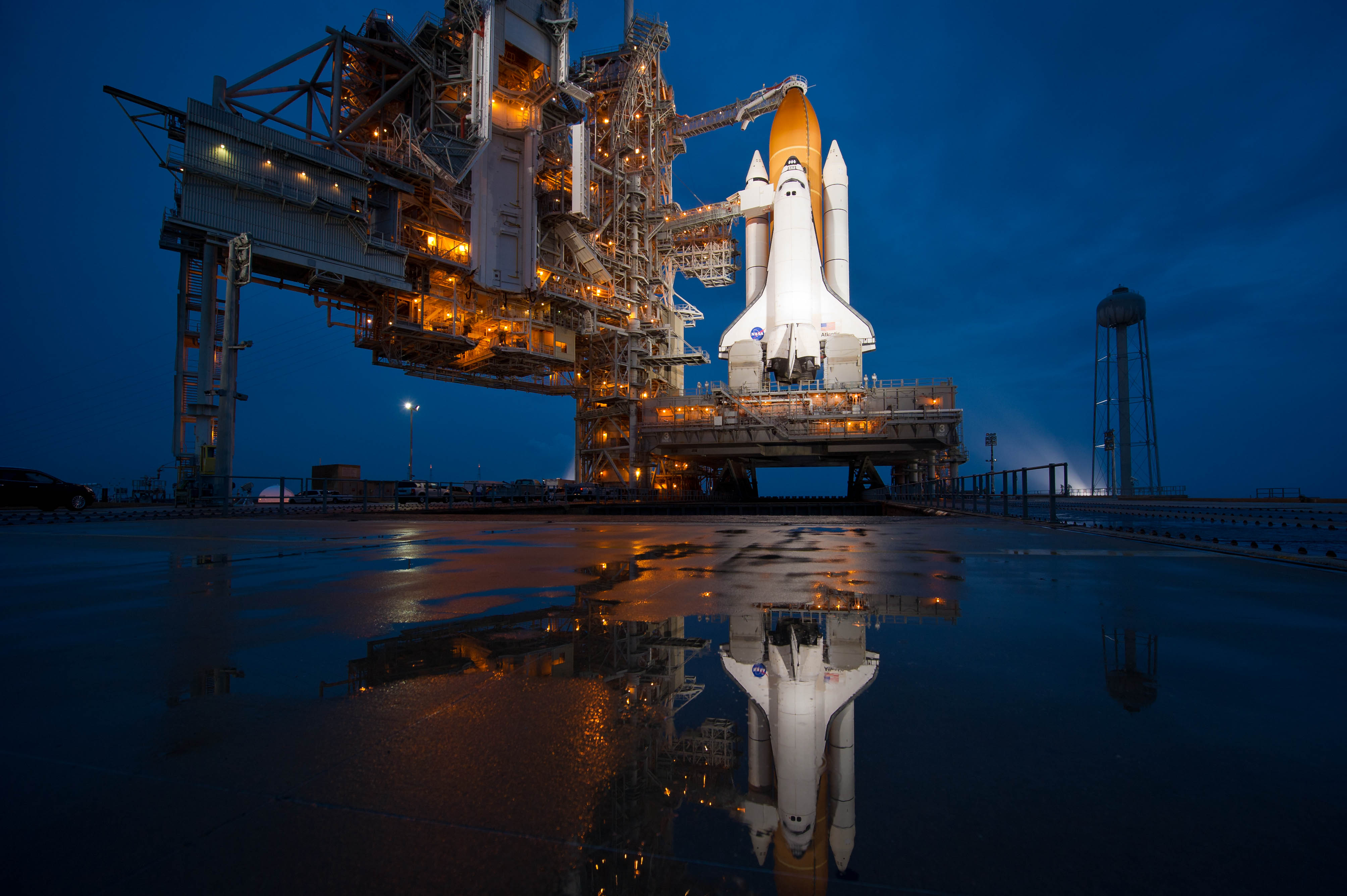
The Space Shuttle program ran from April 12, 1981 (Columbia, STS-1) through July 21, 2011 (Atlantis, STS-135). Five orbiters flew 135 missions over 30 years. Two were lost: Challenger on January 28, 1986 (73 seconds after launch from LC-39B), and Columbia on February 1, 2003 (during reentry over Texas, after a launch from LC-39A). Fourteen crew died across the two accidents. The Shuttle’s launch operations were divided between LC-39A and LC-39B on Kennedy Space Center’s Merritt Island facility, just north of Cape Canaveral proper. The vehicle was retired in 2011 after Atlantis’s final mission and the orbiters were dispersed to museums.
What the Shuttle was
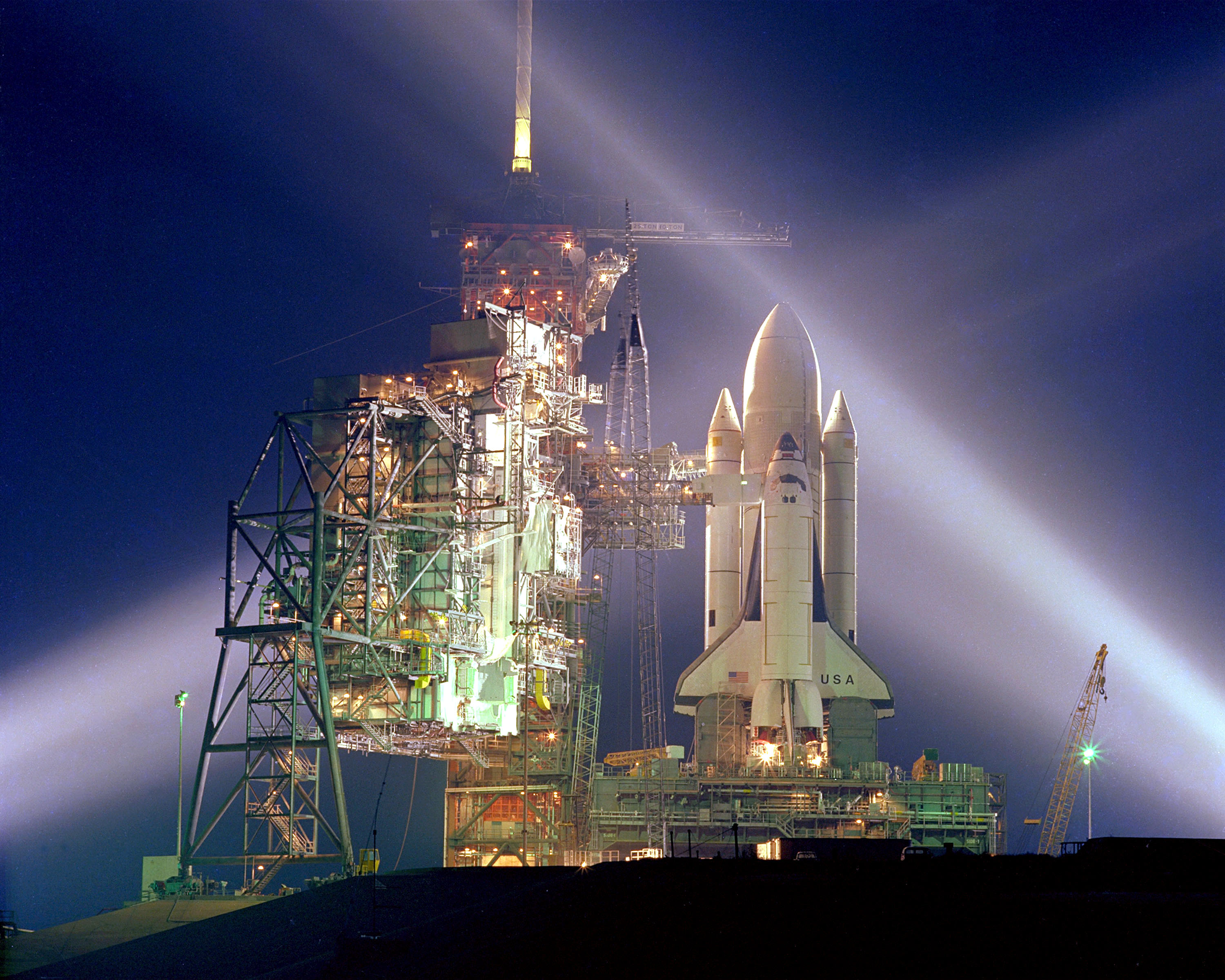
The Space Shuttle was a reusable spacecraft designed in the 1970s and operational from 1981 to 2011. The vehicle consisted of three main components: the orbiter (which carried crew and payload), the external tank (which carried liquid hydrogen and liquid oxygen for the main engines), and two solid rocket boosters (which provided most of the launch thrust).
The orbiter was the size of a DC-9 commercial airliner: 122 feet long, 78-foot wingspan, weighing about 165,000 pounds dry. It carried a crew of up to seven and a payload of up to 50,000 pounds to low Earth orbit. The cargo bay (the payload bay) was 60 feet long and 15 feet wide, allowing the Shuttle to deploy or service satellites, dock with the International Space Station, and carry scientific laboratory modules.
The Shuttle was the first reusable spacecraft. The orbiter and the SRBs were recovered after each flight; only the external tank was expended. The reusability was meant to lower per-launch costs. In practice, the Shuttle was significantly more expensive than competing expendable launch vehicles because the refurbishment between flights was labor-intensive and the safety overhead was extensive.
The launches
The 135 Shuttle missions launched from two pads:
- LC-39A: 82 launches
- LC-39B: 53 launches
The orbiters flew variable numbers of missions:
- Columbia: 28 flights (lost 2003)
- Challenger: 10 flights (lost 1986)
- Discovery: 39 flights (retired 2011)
- Atlantis: 33 flights (retired 2011)
- Endeavour: 25 flights (retired 2011)
The peak operational tempo was 1985, when nine launches happened in 12 months. The Challenger disaster grounded the program for 32 months. The recovery to four-launches-per-year tempo took until 1989.
The Columbia disaster in 2003 grounded the program for 30 months. Subsequent operations focused on completing the International Space Station, with most post-2005 flights running ISS assembly and resupply missions.
What the Shuttle did
The Shuttle’s accomplishments were significant. The vehicle:
- Deployed the Hubble Space Telescope (1990) and performed five servicing missions to keep it operational
- Built most of the International Space Station, with 37 assembly flights between 1998 and 2011
- Launched 24 communications and Earth observation satellites
- Conducted three Spacelab science missions for European and Japanese partners
- Hosted the Russian Mir docking missions in 1995-1998
- Trained the workforce, ground operations, and procedures that informed everything that came after
The Shuttle also taught NASA lessons that did not always result in the agency listening. The Challenger and Columbia disasters both involved organizational failures (production-line scheduling pressure, safety-margin erosion, communication breakdowns between contractors and NASA management) that the post-accident investigations documented in detail. The recurring pattern (organizational normalization of deviance) is a case study in management science.
The cape during the Shuttle era
The Shuttle program supported Brevard County employment of about 15,000 direct NASA and contractor jobs through most of its operational life. The cape and the surrounding communities (Cocoa Beach, Titusville, Port St. John, Merritt Island) reached peak space-economy population in the early 2000s.
The end of the Shuttle program in 2011 was a major economic disruption. The direct workforce shrank by about 9,000 jobs in 2010-2012. Local home prices dropped 30 percent in the Titusville area. Hotels closed. The economic lull lasted until the commercial space industry, primarily SpaceX, replaced enough of the workforce to stabilize the region in the mid-2010s.
STS-135 : the final mission
The last Shuttle mission was STS-135, launched on July 8, 2011, from LC-39A. The crew was four people, the smallest Shuttle crew complement to date: Commander Chris Ferguson, Pilot Doug Hurley, Mission Specialists Sandra Magnus and Rex Walheim.
The mission was an International Space Station resupply flight, delivering the Multipurpose Logistics Module Raffaello with about 9,400 pounds of supplies and equipment. The mission was deliberately small in scope. The four-person crew (instead of the usual seven) was the result of having no other Shuttle available as a rescue vehicle if Atlantis had been damaged in orbit.
The mission was 12 days, 18 hours, 27 minutes. Atlantis landed at the Shuttle Landing Facility at Kennedy Space Center on July 21, 2011, at 5:57 AM EDT. The landing ended 30 years and 100 days of Shuttle operations.
The orbiter Atlantis was transferred to the Kennedy Space Center Visitor Complex for permanent display. It’s now housed in a dedicated 90,000-square-foot facility opened in 2013.
What the Shuttle era left
Three things, lasting.
First, the launch pads themselves. LC-39A is now operated by SpaceX under a 2014 lease and hosts Falcon 9, Falcon Heavy, and Crew Dragon missions. LC-39B has been modified for NASA’s Space Launch System (the Artemis program) and hosted the SLS Block 1’s first launch in November 2022.
Second, the workforce knowledge. The cape’s ground operations expertise (about 30 years of refining launch processing, range safety, fueling, and crew operations) has been carried forward by both the legacy NASA workforce and the new commercial operators. SpaceX hired hundreds of former Shuttle ground crew when scaling up Falcon 9 operations in the 2010s. Blue Origin and ULA also drew heavily from the Shuttle-era talent pool.
Third, the community. Cocoa Beach, the City of Cape Canaveral, Titusville, and Merritt Island are still essentially Shuttle towns culturally. The local schools, hotels, restaurants, and small businesses oriented around the Shuttle workforce for 30 years and still carry that imprint. The post-Shuttle decline in the early 2010s was painful but partial; the cape did not become a ghost town.
The Shuttle’s verdict
The verdict on the Shuttle program is mixed and likely will remain so. The vehicle was an engineering achievement: a reusable spaceplane that flew for 30 years and accomplished missions no other system could have done. The Hubble servicing program alone justified some portion of the program’s cost. The ISS construction would have been substantially harder without Shuttle.
The vehicle was also expensive: per-flight costs in the high hundreds of millions of 2010 dollars, an order of magnitude more than the agency’s original projections. The Shuttle’s reusability never translated into the per-pound launch costs NASA promised in the 1970s.
The two crew losses were the result of organizational failures more than technical ones, which makes them harder to forgive. The post-Challenger investigation showed that engineering concerns had been overridden by schedule pressure. The post-Columbia investigation showed that foam-strike damage was a known risk that the agency had explained away.
The Shuttle was, on balance, neither the cheap reusable space transportation system its 1970s advocates promised nor the white elephant its 21st-century critics describe. It was a complicated machine that did real work, killed 14 people, and ended on July 21, 2011, when Atlantis touched down at the cape.
The cape kept going.