The Cape Canaveral Lighthouse Foundation and the 2007-2008 restoration
Volunteers founded the Lighthouse Foundation in 2002 to keep the 1894 iron tower from rusting into the sand. The 2007-2008 restoration sandblasted it down to bare metal and painted it back to the 1894 daymark.
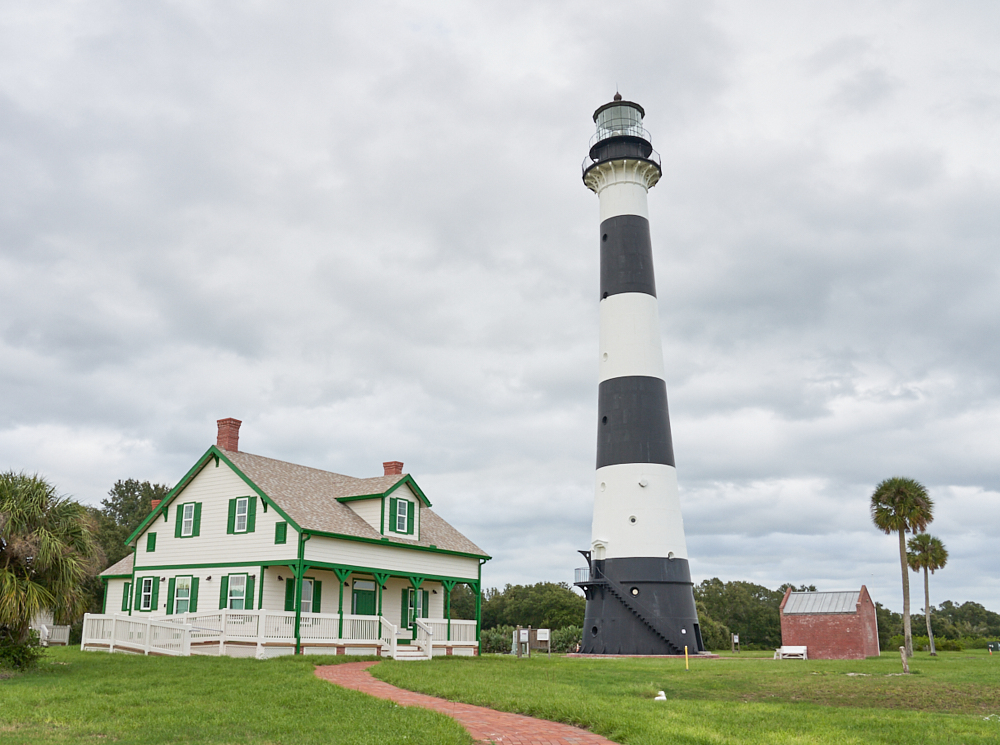
The Cape Canaveral Lighthouse Foundation was founded in 2002 by a coalition of preservation advocates, former cape residents, and Cocoa Beach community members who wanted to ensure the 1894 iron tower survived the 21st century. By the early 2000s, the lighthouse had not been comprehensively restored in 60 years, and Florida’s salt air had eaten significantly into the iron plates. The Foundation worked with the US Air Force (which had taken responsibility for the structure under a 2000 transfer from the Coast Guard) to fund and execute a full restoration in 2007-2008. The project sandblasted the tower down to bare metal, replaced 12 corroded plates, repainted the structure in the original 1894 black-and-white daymark pattern, and refurbished the keeper’s cottage. The total cost was about $1.4 million.
The structural problem
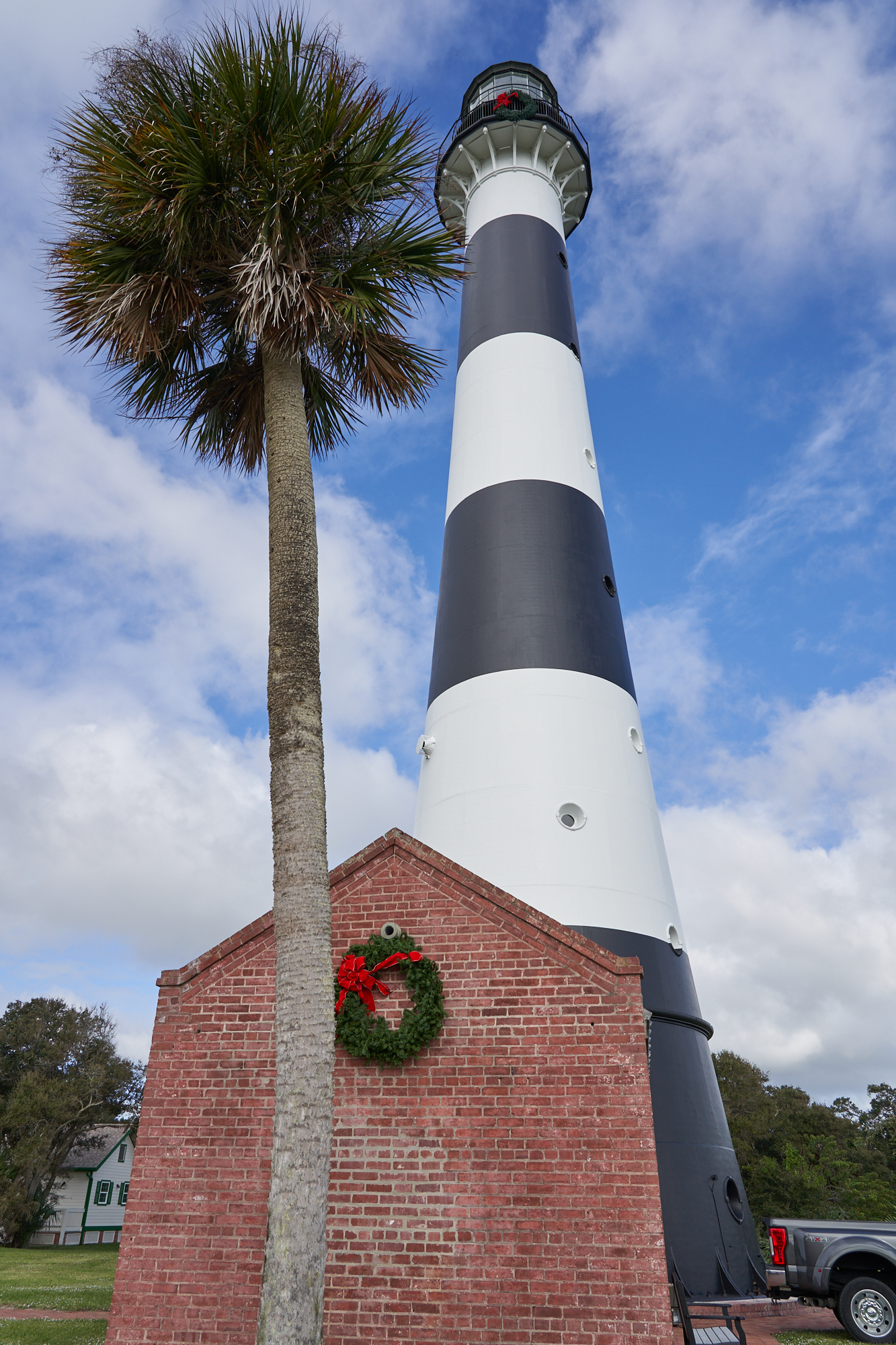
The cape lighthouse is exposed to Atlantic salt air 365 days a year. Iron, in salt air, corrodes. The 1894 tower had been painted regularly through its operational life, but maintenance had become sporadic after automation in 1967. By 2000, the protective paint coatings on the iron plates were failing in multiple places. Corrosion was visible on the upper third of the tower and around the base.
A 2001 structural survey by a Coast Guard contractor identified 12 plates with corrosion penetrating more than 25 percent of plate thickness. If left unrestored, those plates would have needed replacement within 10 to 15 years. If left longer, the structural integrity of the tower itself would be at risk.
The 2000 transfer
The Coast Guard had operated the lighthouse since 1939, when the Lighthouse Service was absorbed into the Coast Guard. By 2000, the Coast Guard’s role had become primarily a navigation function: maintaining the rotating beacon, the radio aids to navigation, and the basic structural integrity of the tower.
The National Historic Lighthouse Preservation Act of 2000 (Public Law 106-355) provided a framework for transferring historic lighthouses from the Coast Guard to other federal agencies or non-profit organizations that would maintain them as historic structures. The Cape Canaveral Lighthouse was transferred from the Coast Guard to the Department of the Air Force under this Act on October 14, 2000.
The transfer left the Coast Guard responsible for the active beacon (which is still operated as Coast Guard Light List #25,830) but transferred the structural maintenance and historic preservation responsibility to the Air Force. The Air Force’s 45th Space Wing assumed operational responsibility for the building.
The Foundation
The Cape Canaveral Lighthouse Foundation was incorporated in Florida as a 501(c)(3) non-profit on March 18, 2002. The founding board included:
- Sonny Witt, a Brevard County aerospace engineer who had lobbied for the lighthouse’s transfer to the Air Force
- Sandy Forrester, a Cocoa Beach historical society member with extensive maritime preservation experience
- Henry Wilson III, a descendant of the cape’s pre-1949 Wilson family
- Robert Foltz, a retired US Coast Guard officer
The Foundation’s mission was simple: ensure the lighthouse remains structurally sound, operational, and accessible (as much as security allows) to the public.
The Foundation’s initial funding came from membership dues, small donations, and a series of preservation grants from the Florida Historical Society and the National Trust for Historic Preservation. The Foundation’s first major project was the 2003 site survey that documented the structure’s condition and developed the restoration scope.
The 2007-2008 restoration
The full restoration was funded jointly:
- US Air Force: approximately $1.2 million, drawn from the 45th Space Wing’s facility maintenance budget
- Cape Canaveral Lighthouse Foundation: approximately $200,000, from membership dues, donations, and grants
The work was contracted to LightHouse Restoration LLC, a Maryland-based firm specializing in historic lighthouse work. The scope included:
- Erection of scaffolding around the full 145-foot tower
- Sandblasting of all exterior iron plates down to bare metal
- Replacement of 12 plates that had corrosion penetration beyond restoration limits
- Application of a multi-layer marine-grade coating system: zinc primer, intermediate epoxy, polyurethane topcoat
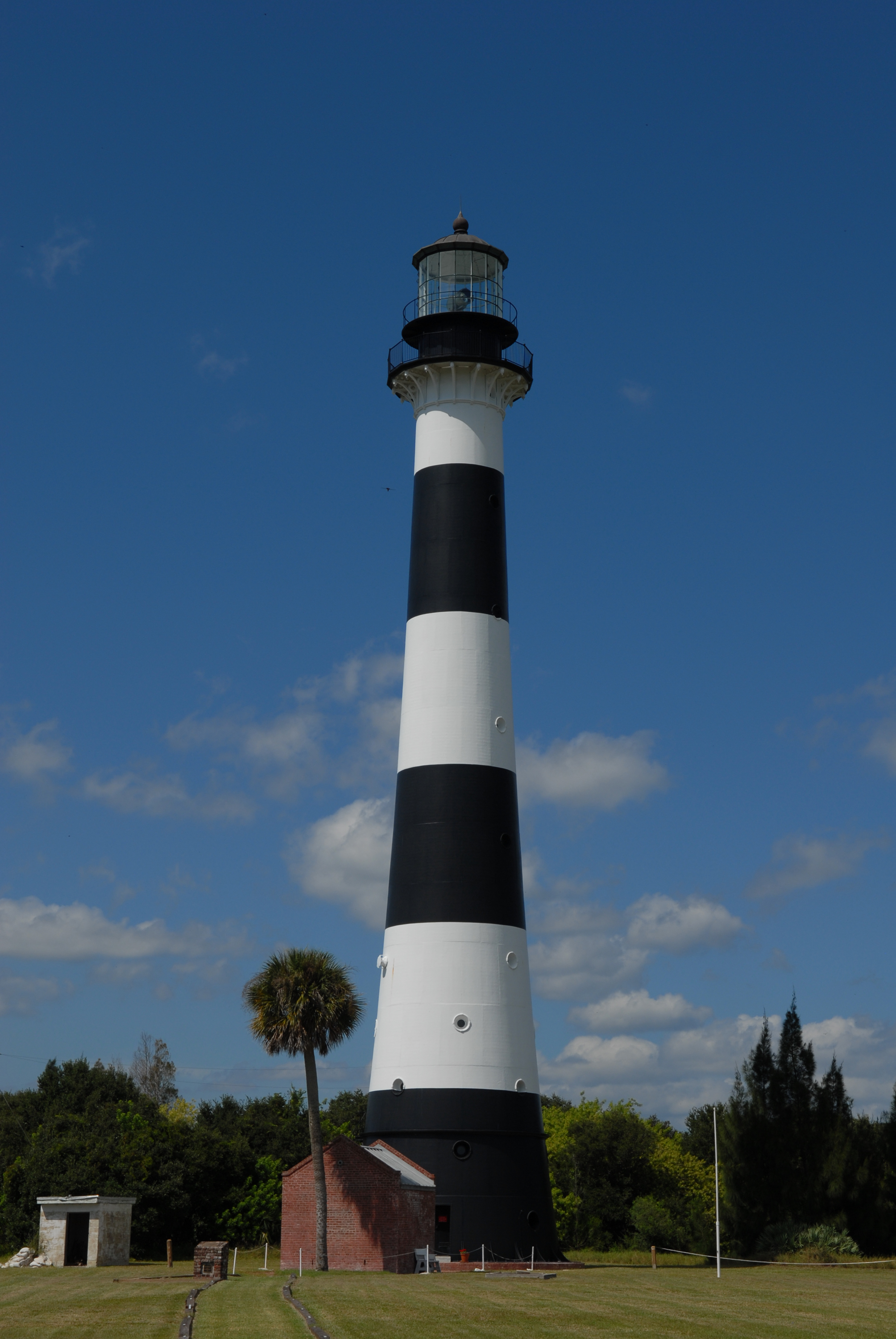
- Restoration of the original 1894 daymark pattern: black bands at top and bottom of the tower, white field in the middle
- Refurbishment of the interior cast-iron staircase (203 steps)
- Restoration of the keeper’s cottage at the base of the tower
- New windows in the cottage matching 1890s style
- Restoration of the oil house adjacent to the cottage
The work ran from April 2007 through August 2008. The Coast Guard maintained light operations throughout the restoration, though the beacon was temporarily covered during specific sandblasting phases.
Public access
The lighthouse sits on Cape Canaveral Space Force Station, which is a secured military facility. Public access is restricted. The Foundation arranges occasional public tours through coordination with the 45th Space Wing security office. Tours are escorted, require government-issued photo ID, and run typically 3 to 6 times per year. Tours sell out within hours of being announced.
The Foundation also offers private group tours for veteran organizations, historical societies, and educational groups. The waiting list for private tours runs approximately 18 months.
The Foundation today
In 2026, the Foundation continues to operate. Annual budget is approximately $200,000. The Foundation maintains a small museum at the base of the tower (accessible only via escort), conducts tours, supports educational programming with Brevard County schools, and works with the 45th Space Wing on ongoing maintenance.
The Foundation’s current board has expanded to 11 members and includes representatives from the Coast Guard, the Air Force/Space Force, Brevard County government, and several local historical societies. The current executive director is Sonia Cole, in office since 2018.
The lighthouse’s significance
The Cape Canaveral Lighthouse is the only operational lighthouse inside an active US military launch range. It is one of the oldest continuously operating navigation aids in the United States: the original 1848 light burned for 13 years, the 1868 iron replacement burned for 26 years, and the 1894 tower (at its new inland location after the 1894 move) has burned for 132 years. The continuity of the cape’s light, from 1848 to today, has only been interrupted by the 1861-1867 Civil War dismantlement.
The preservation work the Foundation has done is the reason that continuity persists. Without the 2002-2008 advocacy and restoration, the 1894 tower would have corroded beyond restoration limits within 10 to 15 more years. The 2008 work bought the tower another 50 years of operational life.
The lighthouse stands roughly 2 miles north of the modern launch pads. Falcon 9 launches pass within 600 yards of the tower. The juxtaposition of an 1894 iron lighthouse and a 21st-century reusable rocket has become one of the cape’s iconic images. The Foundation’s work is the reason that image exists.
Why this matters
Three reasons.
First, historic preservation. The lighthouse is one of Florida’s oldest continuously operating navigation aids. Losing it would be losing one of the cape’s three irreplaceable historic structures (the lighthouse, the two pre-1949 cemeteries, and the LC-34 Apollo 1 memorial site are the cape’s three irreplaceable historic features).
Second, public access. The Foundation’s tours are the only legal way for civilians to visit the cape’s historic structures without a separate military escort or contractor pass. The Foundation effectively serves as the public’s interface to the cape’s historic past.
Third, continuity. The lighthouse keepers in 1848 lit a brick tower. The keepers in 1868 lit a new iron tower. The keepers in 1894 moved that tower a mile inland and lit it at its new location. The Coast Guard automated the light in 1967. The Foundation in 2002 took up the maintenance role. Each generation has accepted responsibility for the light. The 2008 restoration was that generation’s act of responsibility.
The light is still on. That’s the point.