Challenger and the Cape : January 28, 1986
The Challenger broke apart 73 seconds after liftoff on January 28, 1986. Seven crew died. The cape watched it happen in person and on television. The cape's grief was a community grief, not just NASA's.
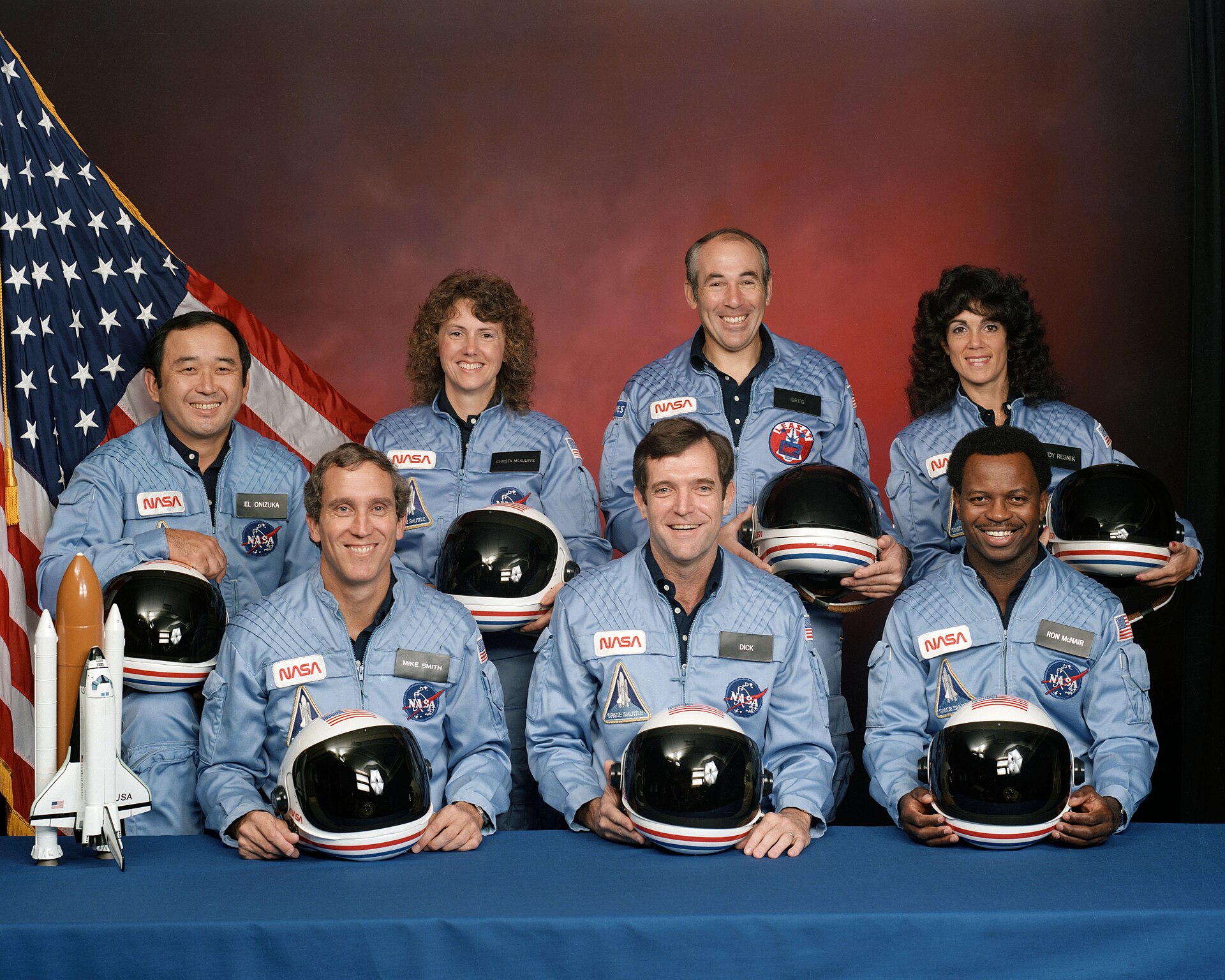
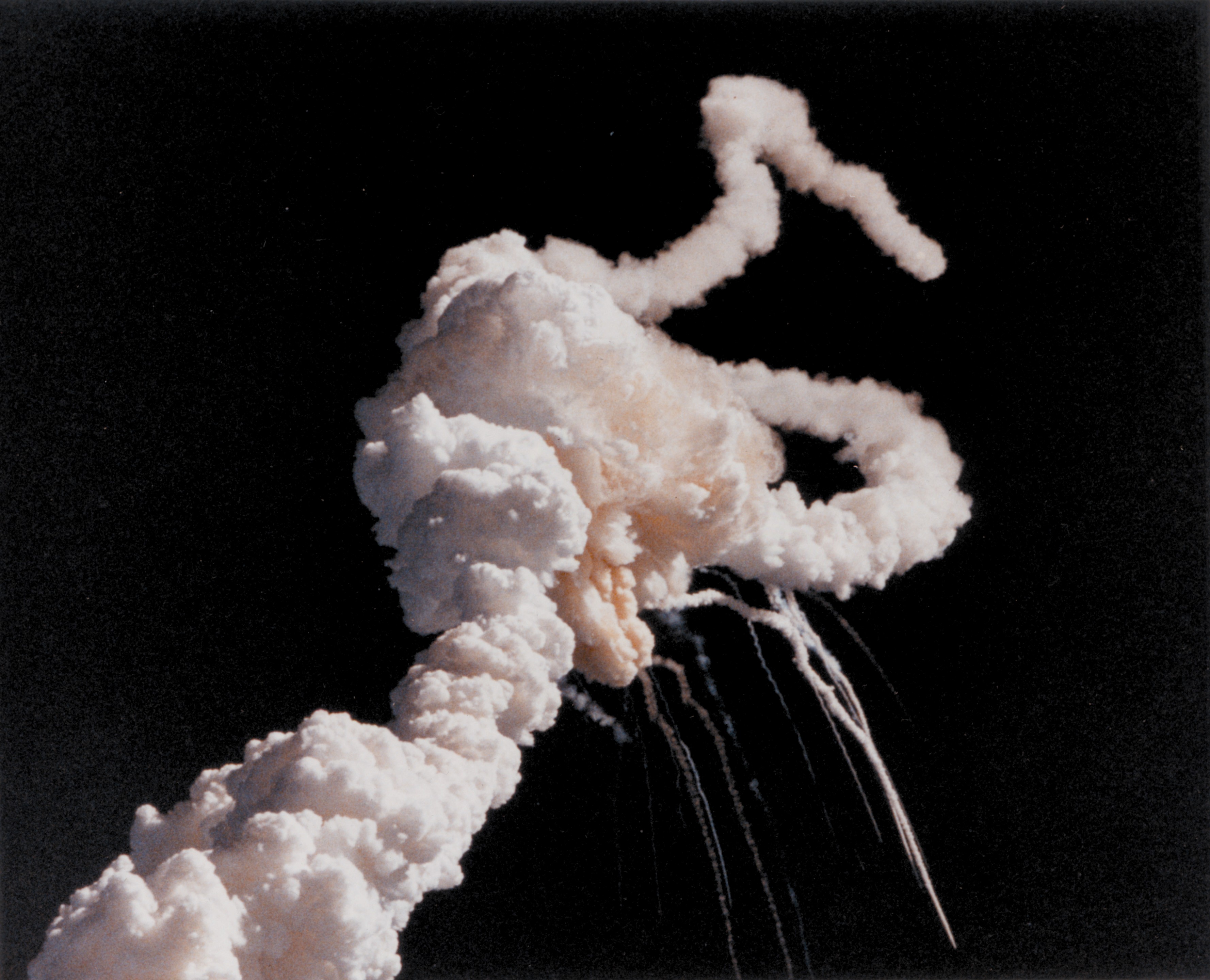
The Space Shuttle Challenger broke apart 73 seconds after liftoff from Launch Complex 39B on January 28, 1986, at 11:39 AM EST. The vehicle was destroyed at about 46,000 feet altitude over the Atlantic 13 miles east of the cape. Seven crew died: Mission Commander Dick Scobee, Pilot Mike Smith, Mission Specialists Judy Resnik, Ron McNair, Ellison Onizuka, Payload Specialist Greg Jarvis, and Teacher in Space participant Christa McAuliffe. The cause was the failure of an O-ring seal on the right solid rocket booster, which had been compromised by overnight temperatures below the seal’s qualified operating range. NASA grounded the Shuttle for 32 months. The Cape watched it happen. The Cape’s response was different from NASA’s because the Cape was the place, not the agency.
The launch
STS-51-L had been scheduled for January 22. Six days of weather and technical delays pushed it to January 28. The morning of the 28th was unusually cold for Florida: 36°F at sunrise at the cape, with ice forming on the launch tower’s water systems. Engineers from Morton Thiokol, the company that built the solid rocket boosters, told their management the night before the launch that the cold could compromise the O-ring seals. Thiokol management decided to recommend launch anyway. NASA accepted the recommendation.
Liftoff was at 11:38 AM EST. The vehicle cleared the tower normally. At 73 seconds, a plume of hot gas escaped from the right SRB’s lower field joint. The plume burned through the external tank’s structural attachment, the tank ruptured, and the vehicle disintegrated.
The crew compartment separated from the vehicle in one piece and fell ballistically into the Atlantic. The Rogers Commission’s later analysis concluded the crew was likely conscious during at least part of the fall, which lasted approximately two minutes and 45 seconds. The impact with the water at 200 mph was unsurvivable.
What the Cape saw
The Cape had a clear winter sky. The launch was visible from Cocoa Beach, the City of Cape Canaveral, Titusville, and the entire Indian River causeway. The vehicle’s breakup at 46,000 feet was visible to anyone watching.
The pause in the cape community was immediate. Restaurants on AIA stopped service. Schools were dismissed. The cape’s two main highways (AIA and US-1) became near-impassable as parents drove to pick up children early.
Christa McAuliffe, the New Hampshire teacher selected as the first civilian Shuttle passenger, had been the most-publicized crew member. Florida schools, including Cocoa Beach High School, had been watching the launch on classroom televisions. The reaction in the schools was particularly intense because the teacher-on-board concept had made the mission feel like everyone’s mission.
Florida Today’s coverage in the following days documented the community response: spontaneous memorials at Patrick Air Force Base, candlelight vigils on the Cocoa Beach Pier, donations to the families that came in faster than NASA’s Public Affairs office could process.
The Cape’s grief vs NASA’s grief
NASA’s response was institutional and managerial. The Rogers Commission was empaneled within days. The flight readiness review process was reformed. The agency apologized publicly. Senior managers were demoted or transferred. The Shuttle redesign program was funded.
The Cape’s response was different. The Cape was where the launch had happened, where the crew had lived during pre-flight quarantine, where the families had stayed in the days before launch. The Cape’s grief was personal and continuous rather than institutional and procedural.
The seven crew families spent the immediate post-disaster days at the Patrick AFB officers’ quarters. NASA staff and Air Force personnel rotated through to provide support. The Brevard County community sent food, flowers, child care, and quietly insistent privacy protection that kept the most aggressive reporters away from the families’ temporary residences.
The disaster permanently changed how the cape community related to launches. Before Challenger, launches were routine background. After Challenger, every launch carried, on the Cape, an awareness that the rocket could fail and people could die in view of the lighthouse.
The recovery operation
The Atlantic recovery operation lasted nine months. The US Navy, Coast Guard, and NASA recovery teams worked the Atlantic in a 600-square-mile search area east of the cape. The crew compartment was located on March 7, 1986, in 100 feet of water. The remains of the seven crew were recovered between March 8 and April 5.
The recovered crew remains were transferred to Dover Air Force Base for identification, then released to families. McAuliffe was buried in Concord, New Hampshire. Six of the seven crew are buried at Arlington National Cemetery.
The hardware recovery continued through October 1986. Significant components of the right SRB, including the failed field joint, were found and analyzed. The Rogers Commission used the recovered SRB section as primary physical evidence in concluding the O-ring failure mode.
The 32-month gap
The Shuttle program was grounded from January 28, 1986, to September 29, 1988, when Discovery (STS-26) returned the fleet to flight from LC-39B. The 32-month gap was the longest pause in US human spaceflight since the May 1961 Mercury-Redstone 3 launch.
During the gap, the SRBs were redesigned with a third O-ring and a new joint heater. The Shuttle escape system was modified (no on-pad ejection seats, but an in-flight escape pole was added). The management chain between NASA Headquarters, the Marshall Space Flight Center, and the contractors was restructured.
The Cape stayed busy during the gap with payload preparation, range maintenance, and a few unmanned launches. But the residential and commercial workforce that depended on Shuttle operations shrank. Many contractors moved away. The cape’s hotel occupancy dropped 30 percent. Several Cocoa Beach restaurants closed.
The Cape’s memorials
The cape carries several Challenger memorials:
- The Astronauts Memorial at Kennedy Space Center, dedicated in 1991, includes a “Space Mirror” with the names of all 25 US astronauts lost in spaceflight or training, including the Challenger Seven.
- Launch Complex 51B (later renamed LC-46) was renamed the Challenger Memorial Park in 1986. The pad was unused at the time of the disaster.
- A memorial garden at Patrick Space Force Base includes seven trees, one for each crew member.
- Christa McAuliffe Drive in Cocoa Beach, formerly North Atlantic Avenue, was renamed in 1986.
The community also marks January 28 each year. Local schools observe a moment of silence at 11:38 AM. Cocoa Beach High School’s annual memorial assembly has run continuously since 1987.
What Challenger meant for the cape
Three things, lasting.
First, the cape’s identity as a working launch range was complicated by the visible possibility of failure. Every subsequent launch from the cape carries this awareness. The community knows what a Shuttle disintegration looks like from 13 miles away. The knowledge does not go away.
Second, the contractor and workforce reductions during the gap permanently shifted the cape’s economic structure. The peak-Apollo and peak-Shuttle dependency on a single launch program was replaced gradually with a more diversified portfolio: commercial payload, military launches, and eventually SpaceX. The Cape stopped being one-program.
Third, the Cocoa Beach community took ownership of the loss in a way it had not done for the Apollo 1 fire 19 years earlier. Apollo 1 happened during a ground test; Challenger happened in the air over the Atlantic with families watching. The community grief in 1986 produced a level of public memorial that the 1967 fire, in the relatively closed Apollo era, did not.
The cape is not a neutral location. It is the place where, when the rocket fails, the community of about 50,000 immediate neighbors loses something visible. Challenger was the moment that became permanently true.