Bumper 8 : July 24, 1950, the cape's first launch
A V-2 first stage with a WAC Corporal second stage, lifted off Launch Complex 3 at Cape Canaveral on July 24, 1950. The rocket reached 30 miles. The cape's launch history started here.
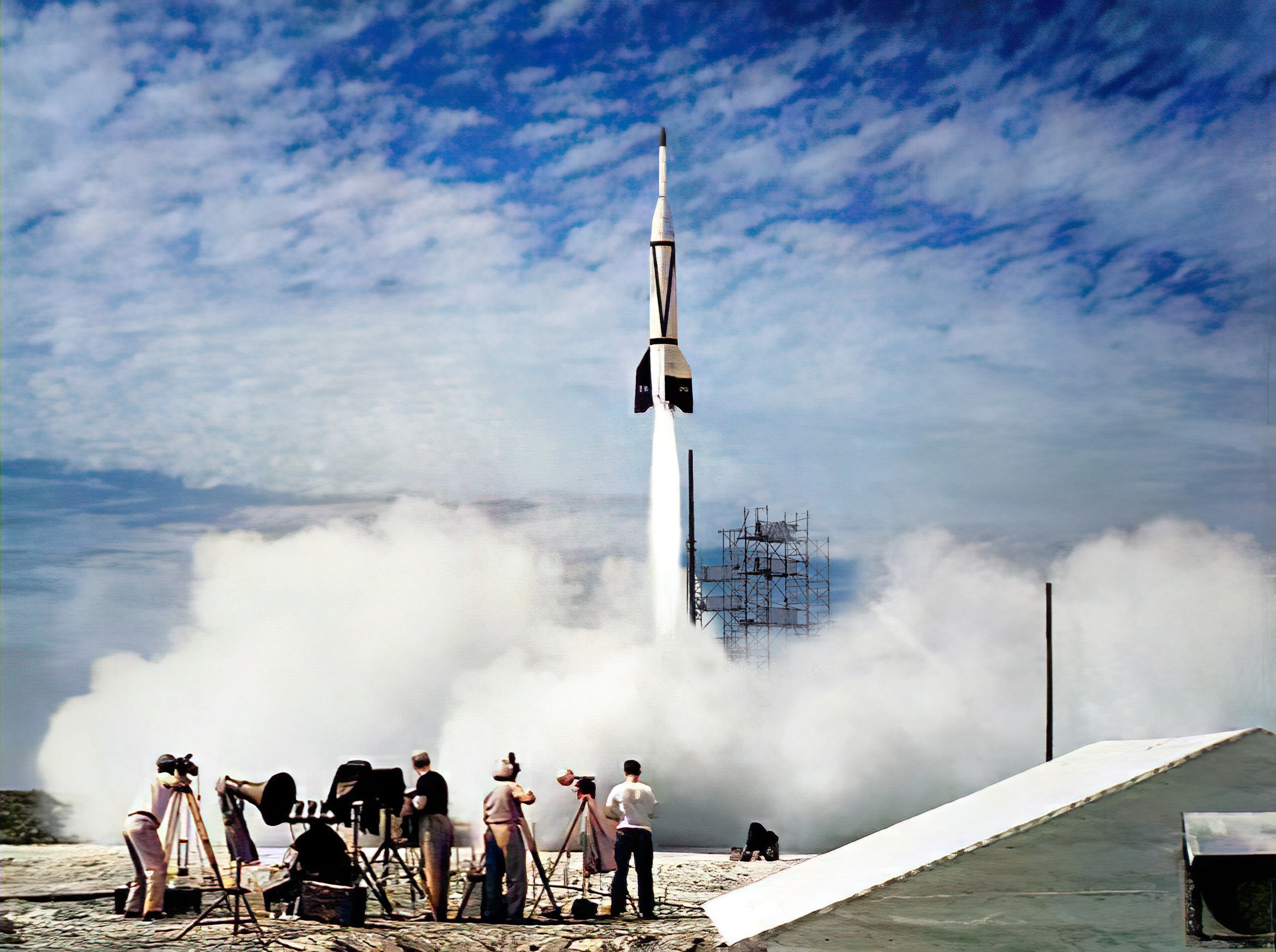
Bumper 8 launched from Cape Canaveral at 9:28 AM Eastern Daylight Time on July 24, 1950. It was the first rocket launch from the cape. The two-stage vehicle was a captured German V-2 missile (the first stage) topped with a small American WAC Corporal sounding rocket (the second stage). The test reached about 30 miles altitude and crashed into the Atlantic. The flight was meant as a range proving exercise for the new Joint Long Range Proving Ground, established 14 months earlier. The pad was Launch Complex 3, a wooden platform on bare sand, with a corrugated-metal blockhouse a few hundred yards back. Five days later, Bumper 7 followed it.
The Bumper program
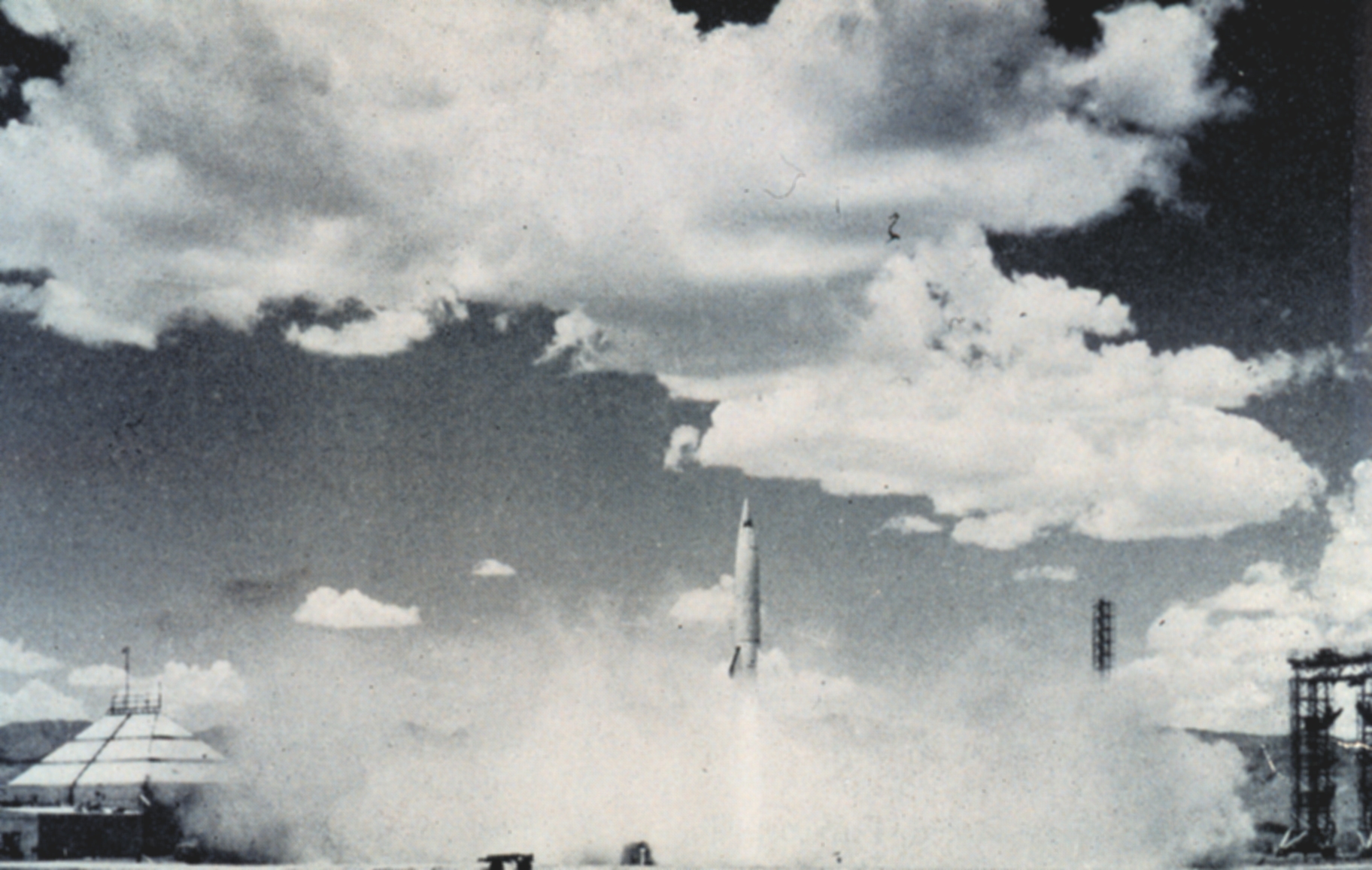
The Bumper project ran from 1948 through 1950 under joint General Electric and Army Ordnance management. Wernher von Braun’s team at Fort Bliss provided the V-2 expertise. The objective was two-stage rocket flight, which had never been demonstrated. The V-2 first stage would lift the WAC Corporal high enough that the smaller rocket’s burn could reach significant altitude.
The first six Bumper flights launched from White Sands, New Mexico, between May 13, 1948, and April 21, 1950. Bumper 5, on February 24, 1949, reached 244 miles altitude, the highest any human-built object had then traveled. Bumpers 6, 7, and 8 were the long-range program. White Sands was too short for them. They needed an open eastern range. They moved to Cape Canaveral.
Launch Complex 3
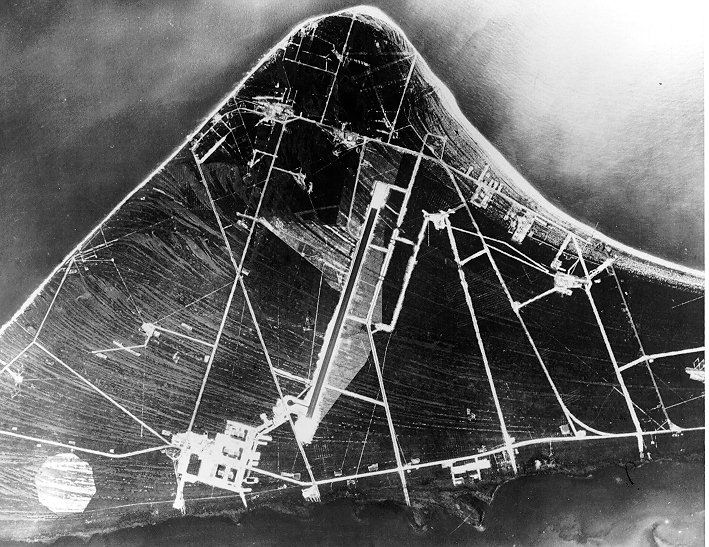
The pad the Bumpers used was Launch Complex 3, the first dedicated launch pad at the cape. It was simple: a wooden launch stand 8 by 8 feet, a concrete deflector plate, and a fuel storage tank. The blockhouse was 250 feet away, a windowless rectangular concrete structure with a steel door. The pad sat about 2,000 feet inland from the shoreline.
The wider Bumper site, called Launch Area 3 in early Air Force documents, included a small fueling facility, an instrumentation tower, and a 30-by-30-foot range safety officer building. The total complex cost about $260,000 in 1949 dollars.
The pad’s coordinates put it at 28.47 degrees north latitude, 80.55 degrees west longitude, about three miles north of the lighthouse and a mile inland of the beach. It was demolished in the late 1960s.
What happened on July 24
The launch was scheduled for July 19. Weather delayed it five days. The countdown on the morning of the 24th was tense for the von Braun team. They had moved their entire operation from White Sands the previous month, and Bumper 8 was the first chance to validate the new range.
The vehicle ignited and lifted normally. The V-2 first stage burned for 60 seconds and reached about 13 miles altitude. The WAC Corporal second stage separated and ignited. It burned for 47 seconds and reached the apogee of about 30 miles. Both stages then fell into the Atlantic at impact points 6 miles and 11 miles downrange respectively.
The flight was not a complete success. The V-2 first stage developed a slight pitch oscillation during burn that the team eventually traced to a defective gyro. The WAC Corporal’s ignition was about 8 seconds late, which cost it altitude. But the rocket left the pad, both stages lit, and the range telemetry tracked the vehicle without error. As a proof of the new facility, Bumper 8 worked.
Bumper 7, five days later
The second cape launch was Bumper 7 on July 29, 1950, also from LC-3. It performed worse: the V-2 first stage shut down early due to a fuel-flow valve problem, the WAC Corporal didn’t separate cleanly, and the vehicle reached only 50,000 feet. It was a failure that the team would have been embarrassed to debug in front of reporters, except that the launches were classified and no reporters were there.
Bumper 7 was the end of the program. The captured V-2 inventory was exhausted, and the Army was already pivoting to American-designed missiles, primarily the Redstone, that the von Braun team was developing at Redstone Arsenal in Huntsville. The cape would not see another launch until July 1951 (a Lark Navy missile from Launch Complex 1) and not see a heavy-lift launch until late 1953 (Redstone test flights from LC-4 and LC-5).
What Bumper 8 proved
Three things. First, the cape range worked as designed: telemetry tracking, range safety, instrumentation, all functioned. Second, multi-stage rocketry was practical. The V-2 plus WAC Corporal stack proved the basic principle that would carry through to Saturn V and Falcon 9: lift a smaller rocket on a bigger rocket. Third, the German engineers had successfully transplanted themselves.
The von Braun group, formally the Ordnance Corps Guided Missile Development Division, had been operating at Fort Bliss since 1945 under Operation Paperclip. They were treated with deep skepticism for the first several years. The Bumper successes built the credibility that would, by 1956, lead to the Redstone Arsenal expansion and von Braun’s eventual leadership of the Saturn rocket program. Bumper 8 was the cape’s first launch, but it was also the moment the German team proved they could be trusted to run an American operational range.
Bumper 8’s significance now
The Bumper program is not famous the way Mercury or Apollo are. There is no museum installation called Bumper. The launch site is gone. The propellant scrubbed off the pad in the 1960s. But every Falcon 9 that leaves the cape in 2026 is a direct descendant of that 30-mile WAC Corporal flight in July 1950. Every range procedure, every safety protocol, every telemetry handoff between the cape and the downrange tracking stations comes from the practices the JLRPG developed during the Bumper flights.
The cape’s launch history is 75 years old as of 2025. Bumper 8 started it. A two-stage rocket made of German and American parts, lifted off a wooden stand on Florida sand, reached 30 miles, fell into the Atlantic. The cape was a launch range. It has been ever since.