The Banana River Naval Air Station, 1940 to 1947
A patrol bomber base that pulled the cape into World War II: PBY Catalinas, PBM Mariners, anti-submarine patrols, hurricane reconnaissance, and the postwar transfer to the Air Force.
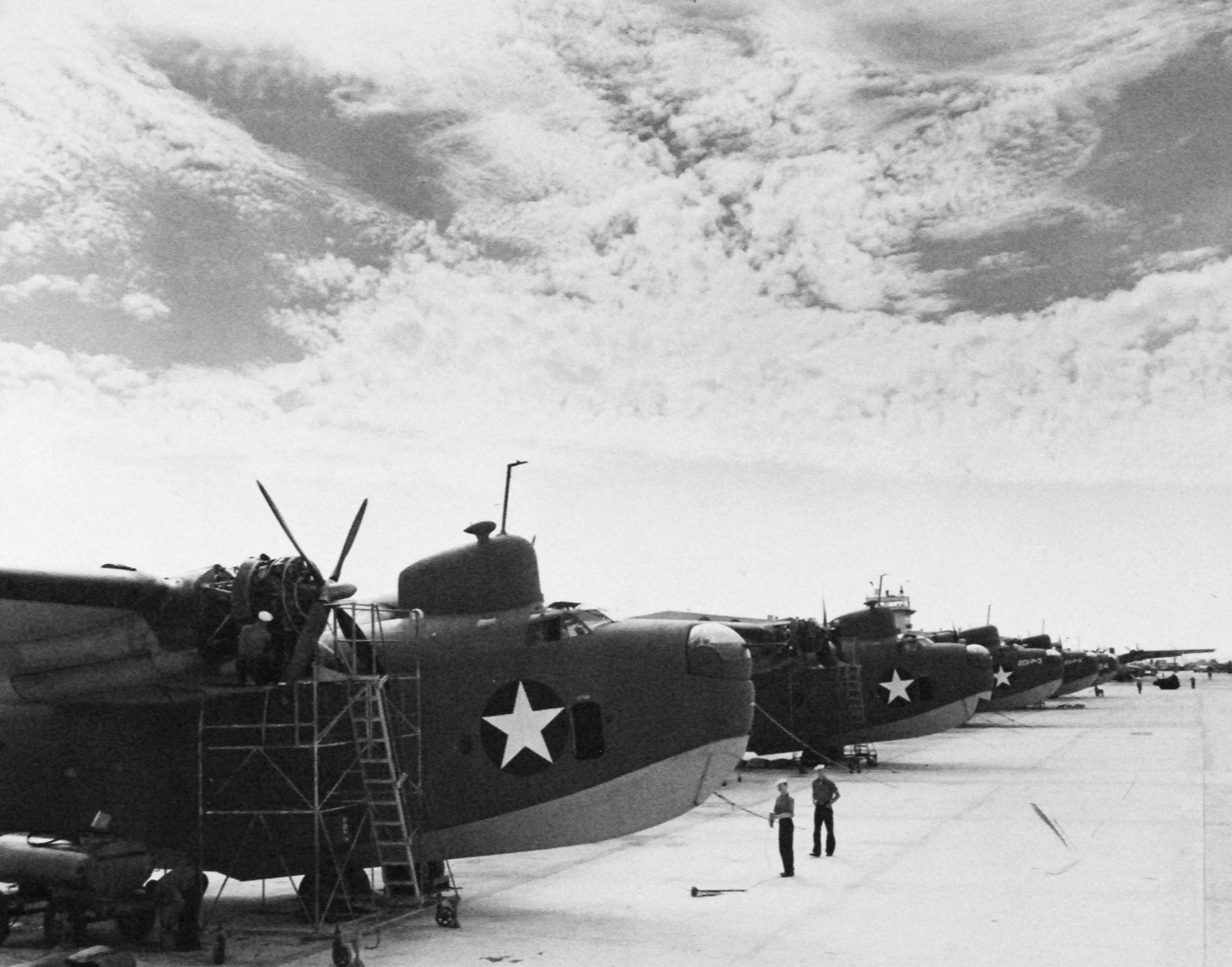
Naval Air Station Banana River opened on October 1, 1940, on the west bank of the Banana River across from what’s now Cape Canaveral Space Force Station. The Navy built it to train patrol bomber crews and run anti-submarine patrols along the Florida coast. PBY Catalina and PBM Mariner flying boats flew out of Banana River from 1941 through V-J Day, hunting U-boats off the Bahamas and along the Gulf Stream. The base also flew the Navy’s first hurricane-reconnaissance missions. After the war, the Navy declared the base surplus in 1947 and transferred the land to the Air Force, which used it as the foundation for what became the Joint Long Range Proving Ground at Cape Canaveral in 1949.
The site
The Navy picked the location for three reasons. The Banana River was wide enough for seaplane takeoff and landing runs. The land east of the river (the cape itself) was scrub and saw palmetto with almost no civilian population. And the Atlantic was 90 seconds of flight away.
Construction started in May 1939 under a $5 million congressional appropriation. The base opened with two seaplane ramps, four hangars, an enlisted barracks, a bachelor officers’ quarters, and a 5,000-foot land runway for the trainers that needed wheels. By 1943, the facility had grown to 1,500 acres and housed about 3,200 personnel.
The base name was specific. It was Naval Air Station Banana River, after the river the seaplanes used. Not Cape Canaveral. The cape itself remained mostly empty, accessed by a single dirt road from the village.
What flew there
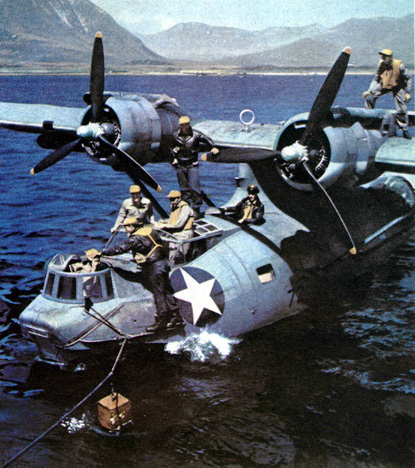
The original training mission was PBY Catalina patrol bombers. The PBY was a twin-engine flying boat, painted gull-gray and white below, designed for long-range maritime patrol. It could stay airborne 24 hours on a full load. Banana River trained the pilots and crews who flew Catalinas out of bases in the Caribbean and South Atlantic.
In late 1942, the base added the Martin PBM Mariner. The Mariner was bigger, faster, and carried more depth charges. Squadron VP-201 deployed Mariners from Banana River starting in October 1942. They flew daily patrols out 600 miles into the Atlantic, looking for U-boats.
The German submarines were the reason the base existed. Operation Drumbeat (Paukenschlag), the U-boat offensive against US East Coast shipping that ran from January through August 1942, sank more than 600 ships off the American coast. Florida waters were a particular killing ground. Tankers running between the Gulf and the East Coast had to pass through the narrow Florida Straits, where U-boats waited in the deep water just offshore.
VP-201 and the other Banana River squadrons couldn’t sink U-boats easily. The Mariner’s depth charges were inadequate against a fully submerged target, and the Germans usually dove the moment they spotted a patrol plane. What the patrols did was force U-boats down. A submerged U-boat moves slowly, can’t track convoys effectively, and burns through battery charge. Forced submergence won the battle of the Atlantic as surely as direct kills did.
Hurricane reconnaissance
The other Banana River mission, and the one that turned out to matter for science: hurricane flights. In 1943, Lieutenant Colonel Joseph Duckworth had flown a borrowed AT-6 trainer into a Gulf hurricane on a bet. He proved the planes could survive it. The Navy and Army Air Forces both started running operational hurricane reconnaissance the following season.
NAS Banana River became one of the primary East Coast bases for hurricane-recon flights. PBM Mariners flew into storms off the Bahamas, recorded barometric pressure, wind speed, and storm position, and radioed the data back to the Miami Weather Bureau. The 1944 Great Atlantic Hurricane, which killed 390 people and sank a destroyer, was tracked from Banana River for several days.
The hurricane mission survived the war. NOAA’s Hurricane Hunters still fly versions of it.
VP-201 and the U-boat that got away
The closest Banana River came to a confirmed kill was on May 13, 1943, when a VP-201 Mariner under Lieutenant junior grade Robert McMahon attacked a surfaced U-boat 200 miles east of Jacksonville. The Mariner dropped four depth charges and reported visible damage. Post-war German records identified the target as U-176, which did sustain damage in that attack but escaped to be sunk by US destroyers off Cuba two days later.
That was as close as the base came. The 1944 Naval Aviation Statistical Summary lists Banana River as logging 41,000 patrol hours over the war, with zero confirmed U-boat kills and an unknown number of forced submergences.
Postwar transfer
By V-J Day, the patrol mission had wound down. The Navy maintained a reduced presence at Banana River through 1946, primarily for hurricane reconnaissance and pilot training. The base was officially declared surplus on August 15, 1947.
The land transfer happened in a chain. The Navy turned the property over to the General Services Administration. The Air Force, which was newly independent of the Army that year, took possession on September 1, 1948. The Air Force renamed the facility Patrick Air Force Base in 1950, after Major General Mason Patrick, the first Chief of the Army Air Service. Patrick Air Force Base is now Patrick Space Force Base, the headquarters of the Cape Canaveral Space Launch Delta.
The seaplane ramps were demolished. The hangars were repurposed for the rocket program. The dirt road north to the cape that the Navy used to truck supplies became, by 1950, the route Bumper 8 took to its launch pad.
What’s still there
Most of the original 1940 base is gone. A few buildings remain on what’s now Patrick Space Force Base, used as administrative offices. The Banana River seaplane ramps are visible from satellite, partially overgrown. The runway is still active as an emergency divert strip.
The cape’s military identity started here. The Joint Long Range Proving Ground didn’t pick Cape Canaveral out of nowhere in 1949. It picked the cape because the Navy had already built the infrastructure: a 1,500-acre coastal base with port access, a runway, barracks, and a clean line east into the Atlantic. The rocket range was the patrol base, repurposed.
That continuity is easy to miss. The launch pads sit a few miles north of where the Mariners flew from. The same scrubland. The same river. Different aircraft.