Apollo at the Cape vs Apollo at Kennedy Space Center
Apollo's early testing happened at Cape Canaveral Air Force Station. The actual lunar launches happened from Kennedy Space Center on adjacent Merritt Island. The distinction matters historically and geographically.
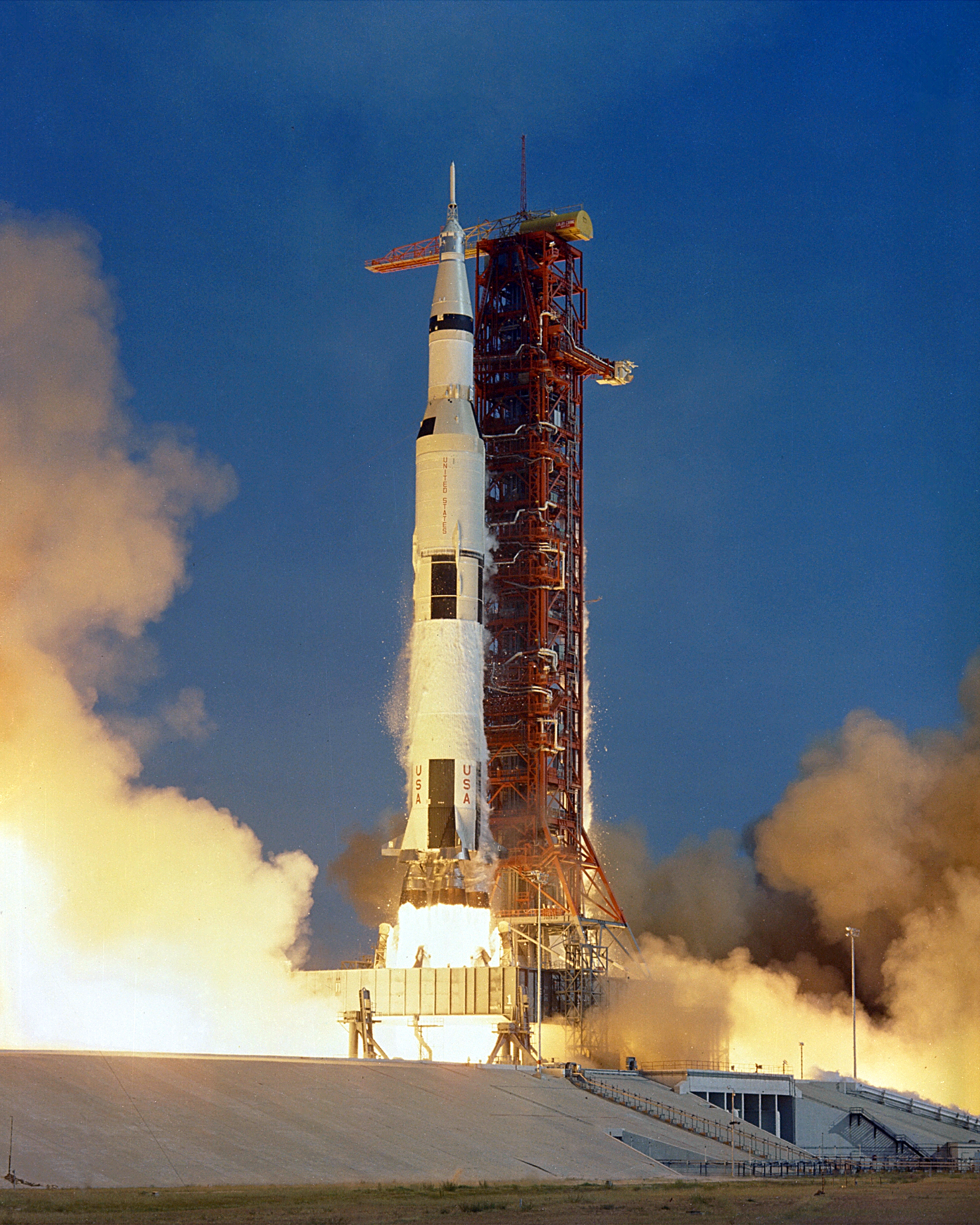
The Apollo program ran from two adjacent but distinct sites in Brevard County. Early Apollo testing (Apollo 1 through Apollo 6) used Cape Canaveral Air Force Station’s Launch Complex 34 and Launch Complex 37, on the cape itself. Apollo 1’s fatal pad fire happened at LC-34 on January 27, 1967. Beginning with Apollo 4 in November 1967, NASA began using Launch Complex 39 on Merritt Island, immediately north of the cape but inside NASA’s separate Kennedy Space Center. All nine lunar Apollo missions (Apollo 8 through Apollo 17) launched from LC-39A or LC-39B at KSC, not from the cape. The visual confusion in popular history (“Apollo launched from Cape Canaveral”) flattens a real institutional and geographic distinction.
Two adjacent facilities, two operators
Cape Canaveral Air Force Station, on the cape peninsula, was Air Force-operated. NASA used CCAFS pads (LC-34, LC-37) for early Apollo testing under a use agreement with the Air Force.
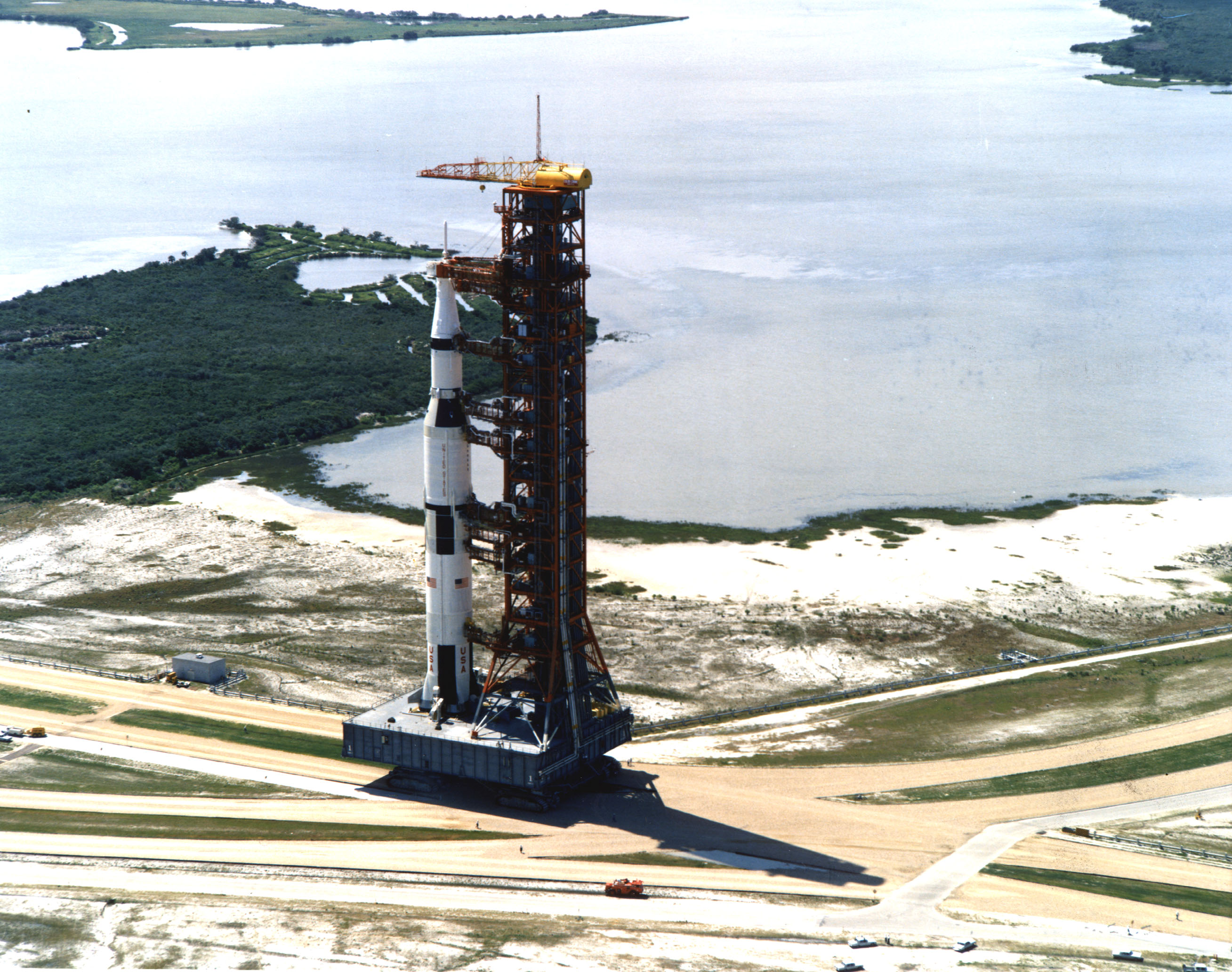
Kennedy Space Center, on Merritt Island, was NASA-operated. NASA acquired the Merritt Island property starting in 1962 specifically for the moon program, recognizing that the cape itself was too small and too active with Air Force operations to host Saturn V launches.
The two facilities share Banana River frontage and are roughly 8 miles apart on the ground. Both lie east of Titusville. The boundary between them, called the gate that separates Air Force from NASA jurisdiction, is at the north end of the cape.
LC-34 and LC-37 : the cape’s Apollo years
NASA started using Launch Complex 34 on the cape in 1961 for Saturn I testing. LC-34 was the cape’s first dedicated Saturn pad, built specifically for the new heavy launcher. LC-37, opened in 1964, was the second.
The Apollo 1 fire happened at LC-34 on January 27, 1967. Astronauts Gus Grissom, Ed White, and Roger Chaffee died during a launch rehearsal when an electrical short ignited the pure-oxygen atmosphere inside the command module. The fire spread in 17 seconds. The crew could not open the inward-opening hatch in time.
The accident shut down the Apollo program for 21 months. NASA redesigned the command module: outward-opening hatch, fire-resistant materials throughout, reduced oxygen pre-launch atmosphere. LC-34 was used for two more launches (Apollo 5 unmanned in January 1968 and Apollo 7 crewed in October 1968) before being retired in 1969.
LC-37 hosted three Saturn I uncrewed test flights from 1964 to 1968 and Apollo 7’s backup, which was never needed. LC-37 was retired in 1972 and later reactivated by ULA in the 2000s as the Delta IV launch site.
Both pads sit on Cape Canaveral Space Force Station land. LC-34 is preserved as the Apollo 1 memorial site, accessible by official tour.
LC-39A and LC-39B : Merritt Island
The Saturn V was too big for the cape pads. The vehicle was 363 feet tall, 33 feet in diameter, and weighed 6.5 million pounds fueled. It needed pad spacing measured in miles to accommodate the blast cone. The cape itself could not provide that spacing without crowding other Air Force operations.
NASA built Launch Complex 39 on Merritt Island specifically to launch Saturn Vs. Construction started in 1963. The complex included two launch pads (LC-39A and LC-39B), the Vehicle Assembly Building (the 525-foot VAB, the largest single-story building in the world when built), and the crawler-transporter that moved the assembled Saturn V from the VAB to the pad on a road three and a half miles long.
LC-39A hosted Apollo 4 (November 1967), Apollo 6 (April 1968), and every crewed Apollo mission from Apollo 8 (December 1968) through Apollo 17 (December 1972) except Apollo 10. LC-39B hosted Apollo 10 (May 1969).
After Apollo, both pads were converted for the Space Shuttle program. They hosted 135 Shuttle launches between 1981 and 2011. LC-39A was leased to SpaceX in 2014 and currently hosts Falcon 9, Falcon Heavy, and Crew Dragon launches. LC-39B is reserved for NASA’s Space Launch System and the Artemis program.
Why the distinction matters
Three reasons.
First, jurisdiction. The cape (CCAFS, now Cape Canaveral Space Force Station) is military. KSC is civilian. The two have different security regimes, different command structures, different histories. Treating them as one facility erases this institutional layer.
Second, the human cost. Apollo 1 happened on the cape, not at KSC. The pad fire is often described in press accounts as having happened “at Kennedy Space Center,” which is geographically wrong. LC-34 is on the Air Force base. The Apollo 1 memorial is on Air Force land.
Third, the moon program’s geography. The Apollo crews trained at Houston, were medically managed there, and recovered there post-mission. They launched from KSC. Mission control was in Houston. The cape contributed to early Apollo testing and ground support but did not host the lunar launches.
Press shorthand conflates all this into “Apollo at Cape Canaveral.” The truth is more specific: Apollo’s Saturn V launches happened from a NASA facility on Merritt Island, eight miles north of the historical Cape Canaveral peninsula.
The shared infrastructure
The two facilities do share critical infrastructure. The Eastern Range, the tracking and telemetry network that monitors every launch, is operated by the Air Force from the cape and supports both CCAFS and KSC launches. Patrick Space Force Base, on the mainland south of the cape, provides logistical support to both facilities.
Cocoa Beach, Cape Canaveral the city, Titusville, and Merritt Island are all immediately adjacent and house both Air Force and NASA personnel. The local economy doesn’t care which agency signs the paycheck.
But the launch pads themselves are distinct. The cape has its history. Kennedy Space Center has its own. The Apollo program lived at both, and the distinction is worth keeping.
A reader’s map
If you visit Brevard County for a launch viewing:
Cape Canaveral Lighthouse, LC-34 (Apollo 1 site), LC-37, LC-40 (SpaceX Falcon 9), LC-41 (ULA Atlas V) are all on Cape Canaveral Space Force Station, the cape proper.
LC-39A (SpaceX Falcon, originally Apollo and Shuttle), LC-39B (SLS, originally Apollo and Shuttle), the VAB, the Apollo/Saturn V Center are all on Kennedy Space Center, Merritt Island.
You can see both from the public viewing areas at Jetty Park and along the A1A causeway. They are visually one continuous launch coast. They are administratively two facilities. Both are worth knowing about as separate places.